Grandpa’s Guns

Grandma’s Quilting

While this is primarily about Grandpa’s guns, it seems fitting to spend a bit of time with Grandma first. After high school she attended KU for one year and was on the basketball team. In all of Tracey’s genealogy work nothing could be found about how Grandma and Grandpa met.

Grandma Sherri Lee Yara
Untitled-2

My Grandpa was a formidable man and had a huge influence on me. But even so, Grandma held her own and deserves recognition. This is the throne she ruled from.

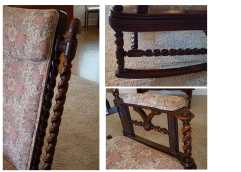
Grandma's Rocker 4
Untitled-1

She kept Grandpa in line, she always set the table for breakfast before going to bed at night, and she organized the canning, which involved 3-4 women, 2-3 men, and a boy (said boy would help with the pickin’ and shuckin’ then avail himself to helping in the kitchen cutting the corn off the cobs and eating as much as he could get away with), mason jars, pots, and all assorted canning paraphernalia. When I spent the night with them, I would sneak — although sneaking was virtually impossible in that squeaky old house — into Grandpa’s bedroom to spy on them thru the furnace vents while they played canasta – Grandma usually won.  I have been told that Grandma could be quite cantankerous, although I never saw that side of her since I was the favorite.

She also made incredible quilts – all hand stitched. In 1942 she joined a Lawrence women’s club, United Home Service Club, to support servicemen from Douglas County. Each box they prepared contained candy, a white handkerchief, shaving lotion, a prayer, and the name of the club. (remember all of the boxes Tracey made and shipped to servicemen from the Sunset house?) Only three of Grandma’s boxes came back unclaimed. In the later years they met each Tuesday in the basement of the Lawrence Community Building to quilt all day long. They sold the quilts to fund candy, fruit, cookies, cigarettes, gum, writing paper, envelopes, and cards for veterans at the VA Hospital in Leavenworth. When the club was disbanded in 1986, Grandma was the president.  The $200 they had left in the treasury was donated to the Salvation Army.

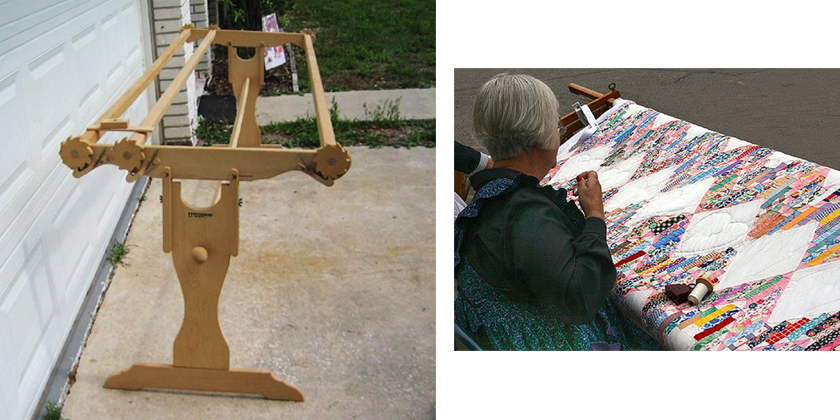
I have her quilt frame. It’s made of two eight-sided wooden rollers about eight feet long on a stand at each end. Similar to this;
05a Quilt Frame

(That’s not Grandma, at least not my Grandma) The material and batting is rolled up on one roller then stretched across, about twenty-four inches, to the other roller and the quilting is done between the rollers. When that area is done, end to end, it is rolled to the other side and a new blank canvas is revealed. Eventually, she developed a nerve problem in her stitching hand and finally could not hold a needle between her thumb and index finger. She was, however, able to complete the quilt she had started and it is probably the most beautiful quilt I have ever seen (uhmmm, maybe second to Tracey’s?). It is known as the Butterfly Quilt and was given to Sherri.

BFQ3
08a Quilt

Now for Grandpa’s Guns

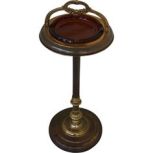
One of my favorite things to do at Grandpa’s was to lose myself in his den. Inside the door to the right was the rolltop desk with the “secret” door in the side. Because it was so secret, there were no secrets inside. There was a cigar-stand ashtray
28-cigar-ashtray-stand

that was usually by a big craftsman-style easy chair

images

but occasionally it would be by his rolltop. The heavy, stale, pungent smell of cigars will send me right back to that room.

Directly opposite the door was the bookcase with the wooden puzzles I told about in my last post.  In the far right corner was the gun closet. The closet had a bottom cupboard about three feet tall filled with the handguns, boxes and boxes of ammo, civil war paraphernalia, matchbook collection, and the wooden blocks (when they weren’t under construction on the den floor). Above the cupboard was the tall closet that held all of the long guns. We didn’t need safes or locks then because gun safety was taught at an early age, not to mention the threat of severe physical harm — a belt was frequently mentioned — was sufficient to install a deep respect for guns.

As a side note here, I do not recall ever having first-hand experience with a belt but I did receive a whoopin’ or two. Dad would ask me if I wanted to go get a switch from the willow tree (one always had to cut one’s own switch – which I never had to do), and that’s all it took. Dad always said it hurt him more than me but I didn’t believe him for a second! I now know what he meant.

After Grandpa died, the guns all stayed where they were until Grandma moved to Lawrence. Then, when Uncle Herb, Grandpa’s brother, died, Dad bought his farm, which was the original homesite.

slide022

The house was originally further back from the road up on the hill in the trees and was later moved to the current location. It was raised and put on giant beams just like they move houses today except they used horses instead of trucks to pull it.

Uncle Herb had married late in life, and his wife Caroline (caro-line, not carolin, and she was AUNT Caroline) was, as I recall six-foot-one. She had Uncle Herb remodel the kitchen and make the counters 40” tall (a typical kitchen counter is 36”) so she didn’t have to stoop over. That was fine until Dad bought the place and had to de-model the kitchen for Mom who was five-foot-two. So anyway, Dad moved all of Grandpa’s guns, which were now actually my guns as I inherited all of them, to his ‘new’ den at Uncle Herb’s old place. He had native oak rough cut into 2×6’s then cut 1 ½” dowels about eight inches long. He drilled holes at a slight angle into the oak boards for the dowels. He then cut strips of leather straps about a foot long and cut a slit into each end to make a loop on each end. One loop went around a dowel and the other loop went around a rifle barrel or stock. So it took two dowels and two strips to hang a rifle. He installed the 2×6’s at the top of the wall, where crown molding would normally be, all around his den. This is where Grandpa’s guns, my guns, hung until Dad died.

Beth and I flew back home for Dad’s funeral and to get my guns and a bunch of other farm stuff. I have one of the blank cartridges fired at the Marine seven gun salute at his funeral.

A few days later I rented a small U-Haul truck and Beth and I took off for California. We were coming into Las Vegas one evening just before dark. I was going to take the next exit for a hotel I had seen signs for when one of Las Vegas’ finest lit up behind me. I pulled over not knowing what I had done wrong and praying they would not look in the back of the truck where the guns were. It was not so much that there were guns but one was highly illegal! Turns out one of the rental truck tail lights was out and they were just letting me know – for safety. I explained I was planning on stopping at the hotel that was now in sight and told them I would get it fixed first thing in the morning before we left. They were fine with that and went back to their car. Heavy sigh of relief! I did not know how I was going to explain to Tracey that Beth was with children’s services and I was in jail in Vegas!

Years later I took the guns with us to Virginia then hauled them back to California again.

Handguns

  1. Colt 1851 Navy
Colt-1851-Navy-20170112_1775

This Colt Navy is patent #2099 , and I find it interesting that the serial # is 182099! It was manufactured in 1865. All parts have matching serial numbers. It is a civilian model, not military issue. I have shot both Colts, and it is awesome! Read the last paragraph for a great description of firing one of these beauts.

The .36 caliber Colt 1851 Navy cap and ball (percussion) is considered the most famous handgun ever made. It is a 5-shot revolver with a hexagonal 7.5″ barrel that was wielded by historical figures like Wild Bill Hickok, Doc Holliday, Robert E. Lee, and Rooster Cogburn. Wild Bill dropped a man from 75 yards in a shootout in Springfield, MO, in 1865. It saw service under the Union Flag, the Confederate Flag, and the Black Flag of Quantrill’s Raiders.

Its smoothness of operation, terrific balance, and natural aiming quality were never equaled in its time. Even after cartridge revolvers came along, many gunslingers continued to prefer the Colt Model 1851. It was the most popular firearm of its day among military men, peace officers, and civilians.

The gun would see worldwide service and would be the standard issue handgun of the Confederacy in the Civil War. Despite that it was meant for the Navy, Army personnel purchased most of them.

“When you pull back on the hammer, there are two very distinct clicks as it goes from half to full-cock. Located at the tip of the now-cocked hammer, the rear sight aligns perfectly with the front bead sight. When you pull the trigger, the hammer drops on the percussion cap. After that, there is a noticeable but very brief delay as the powder ignites. The explosion occurs and a cloud of white smoke emits from the cylinder and the breach. This is shooting in its purest form. The sounds, sights, and smells are a trip back in time to gunfights on distant smoke-filled battlefields and shootouts in barrooms. You get one shot—maybe two—and at six, you are done! What a gun. What a time!” Author unknown.

  1. Colt 1860 Army
Colt-1860-Army-20170112_1786
16b

This Colt Army was patented September 10, 1855, manufactured in 1863, and is serial # 111677. All parts have matching serial numbers. It is a civilian model, not military issue. It is a six shot, .44 caliber handgun with an eight inch barrel and notches to accommodate a matching shoulder stock. I searched gun shows for years trying unsuccessfully to find a shoulder stock.

Along with these two Colts, there was a US belt buckle , black powder flask, black powder horn, cartridge box, and a percussion cap box. With all of these accessories, it is difficult to imagine one or both of these Colts not seeing service in the Civil War, however, based on the serial numbers, both of these Colt handguns were civilian models and were not ‘officially’ used in the Civil War.

Since the Army and Navy Colts each had interchangeable parts (not with each other since they are different calibers), troops would sit around a table cleaning their guns and just grab a part to re-assemble their guns. Consequently, it is fairly rare to find 2 specimens, each with matching numbers.

John Wilkes Booth, assassin of President Lincoln, was killed with the 1860 Army pistol after a 12-day manhunt in April 1865.

  1. .22 Colt Woodsman Automatic Long Rifle
.22-Colt-Woodsman

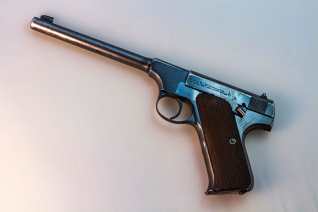
This Colt Woodsman was manufactured in 1925 and is serial # 43699. It has a 6 5/8” barrel. I have shot this beauty many, many times! While it is labeled as “Automatic,” it is in reference to automatic loading, not continuous firing when holding the trigger down. You must squeeze the trigger each time you want to shoot.  I researched this one to be sure it was safe to shoot. Since it was manufactured in 1925, NO HIGH VELOCITY AMMO should be used. Although it is very well made, it shouldn’t fail if you shot some high velocity rounds, but why would you? First concern is safety and second, there is no need to abuse an old beauty like this one. It is safe to use with standard or target ammo.

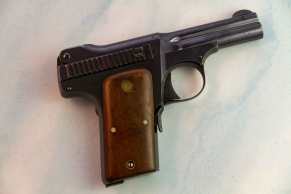
  1. .35 Smith and Wesson Auto CTG
.35-S&W-CTG-20170112_1736

S&W serial  # 4512 with two clips. This gun was owned by Uncle Ferd from Valley Falls.  

He was a horse trader who later became, appropriately, a used car salesman.  Aunt Ethel was the telephone operator mentioned in #3. After Uncle Ferd died, Dad & I took it home, took it apart, and with parts spread out on the kitchen table, Mom commented, “Bet you can’t put it back together without extra parts.” We did and no extra parts were left over. Dad & I went out to shoot the newly stripped and cleaned gun. Threw some beer cans out in the field about 25 feet or so. I took careful aim and squeeeezed the trigger. The gun gave a wimpy ‘pop’. We literally watched the bullet leave the barrel and go about 5 feet. So, we went to town to get some ammo. The owners of both gun shops we went to wanted to buy the gun on the spot. The .35 caliber ammo had not been made in years and if found, probably would not be any better than what we had.

I recently acquired a ‘new’ Colt’.

  1. .22 single shot
.22-Single-Shot-20170112_1758

One grip gone – very rusty. SN 34024. As far as I know, this handgun has always been non-functional. As such, it was one I was allowed to play with till about age 10 when I could play with the ‘real’ ones

  1. .626 cap and ball pistol (19 gauge – consider the size of a 12-gauge shotgun)
.626-Cap-and-Ball-20170112_1749

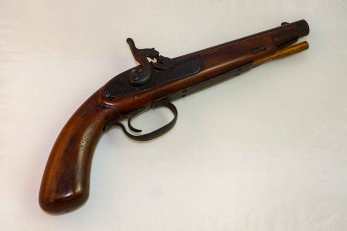
This is another one I was allowed to play with. The name “Joseph” is engraved under the hammer. There is no serial #.  It is 5/8” diameter – considering the size of a .44 caliber, this thing is a monster! We never fired it because we had no mould for balls and the hammer would not stay cocked, which is probably a good thing!

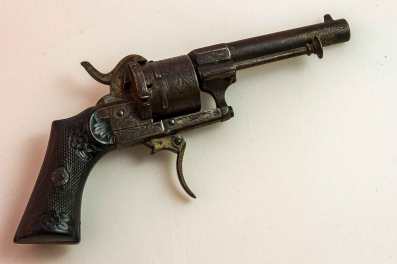
  1. 7mm (.284) French Pinfire
French-Pin-Fire-20170112_1761

Folding trigger – 6-shot revolver – SN 8774 This is manufactured in France, rather than Belgium, as evidenced by the stamp, Eugène Lefaucheux on the barrel. This intricately engraved handgun was also widely used in the Civil War, although ammo was difficult to come by. 

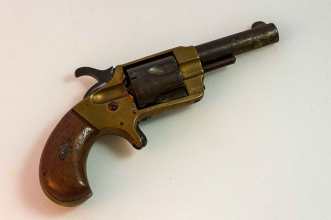
  1. .32 Nero
Nero-20170112_1770

This 5-round, single shot, rim fire revolver with a spur trigger (no trigger guard) has a brass body that was originally nickel-plated (polished nickel looks like chrome) but it was in bad condition, so Dad’s hired man, Chuck, who was really into guns, used the brush on the shop grinding wheel to brush off the nickel coating. It also had huge, clunky grips. Chuck removed these and carved the grips seen here, which are the original style. This type of handgun was a cheap alternative to Colt revolvers and was called a suicide special because they were prone to explode in the user’s hand because of the low-grade material.

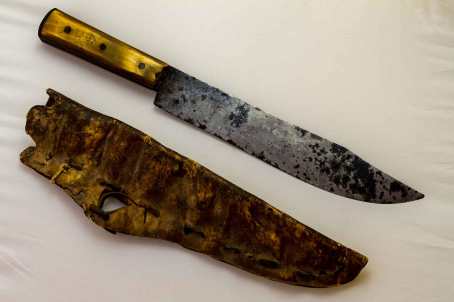
Bowie Knife
Bowie-Knife-20170112_1742

Don’t know the history of this but it is one badass knife! The blade is about twelve inches long and the sheath is leather – very, very dry leather.

Long Guns

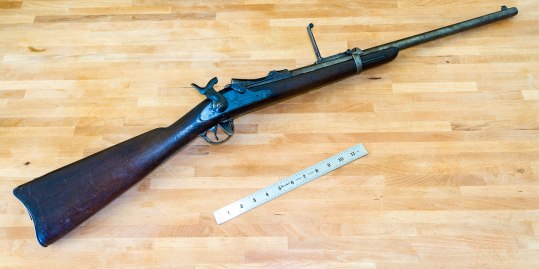
  1. Springfield Trapdoor Carbine – U.S. Model 1884 – SN 381449 –  499 were made in 1875, the date of manufacture of this SN.
30 Springfield-Carbine-1
31 VW Thing

This carbine was given to me by Mr. Hotchkiss when he moved from Donee Diego Dr. The street was named after his wife, Donee. I had commented on his life-size cutout of John Wayne, which started a conversation about guns, and I mentioned that I had a Springfield Trapdoor Rifle. He thought I should have the carbine to go with it. He stopped on his way out the last day he was there and gave it to me. I was flabbergasted! Remember the VW Thing he had?

A .45-70 from the so-called Custer Gun period (prior to June 1876 with serial numbers below 43,700) is easily worth several thousand dollars. They are known as “Custer Guns,” as there is a possibility they saw action at Little Big Horn. This is definitely not a “Custer Gun” but is a classic Springfield Trapdoor Carbine. Carbines were fitted with a stock-mounted bar and saddle ring to be hooked to a leather sling worn diagonally across a trooper’s body, thus curtailing accidental loss from the saddle.

General George Armstrong Custer’s battalion was armed with the carbine version of the Springfield Model 18 at the Battle of the Little Big Horn, also known as the Battle of the Greasy Grass, on June, 25 & 26, 1876. Custer led the unprepared 7th Cavalry based on poor intelligence, bad tactics, and hubris against the Native Americans who were better armed with the superior Henry, Spencer and Winchester repeating rifles. These weapons poured fire into the 7th Cavalry ranks, and the belief that Custer lost at Little Big Horn because of malfunctioning hardware has been largely debunked. The single-shot Springfield Carbines were simply outmatched.

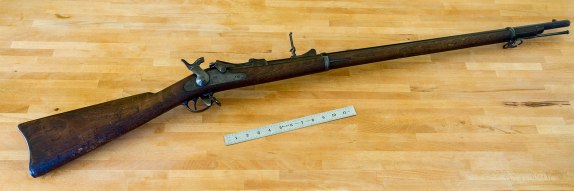
  1. Springfield Trapdoor Rifle – U.S, Model 1873    SN 251641
32 Springfield-rifle1
33 disc

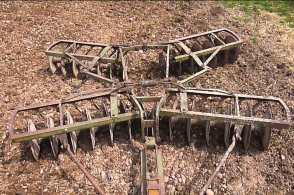
This is also a .45-70. I have fired this sucker and it kicks like a mot…, well, it kicks. This is the rifle that Chuck, the hired man, and I would use to shoot a disk  that was about ¼ mile away in a field.With the rifle held at about a 45 degree angle, pull the trigger, pick yourself up off the ground, then listen carefully and you could hear the ping of the bullet hitting the disk. It was awesome! Read on…

“The Model 1873 was a very powerful rifle and the recoil proved too robust for mounted troops as it tended to unhorse the soldier.” I love that description and can just visualize it! Unless you stand with feet apart, lean forward, back leg with foot perpendicular to your body and front foot pointing the direction you are shooting, you will be unhorsed (or knocked on your ass)!

Chuck was a gun nut and was always trading guns. At one point he had acquired a couple of .45 magnum revolvers that we used to shoot five-gallon cans filled with water. They would explode about six feet into the air with the lid going another ten feet higher and water would spray about ten feet in every direction.They were also fun to use to cut down five-inch diameter trees – with one shot.

  1. Enders Special Service Double Barrel, Side by Side, 410 Shotgun SN 13687
34 Enders-SS-Dbl-Barrell-Shotgun-1

This is the renowned 410 shotgun from the “410 Incident” in installment 2 in which Larry and I burned down a shack above his house. This is a beautiful shotgun. Belying its small bore it has a significant kick, possibly because it does not have a shoulder pad.

  1. Unknown maker, no SN
35 Trapdoor-Breech-ss-1

Trapdoor style, breech loader.  Got nuthin’ on this one. It has always been in this condition.

  1. Unknown maker, no SN
36 Dbl-Barrel-Shotgun-w-hammers-1

Double barrel, hammer style, side-by-side shotgun

Got nuthin’ on this one either! I am sure the black electricians tape will enhance the value. I think the stock is made from a 2×6 board.

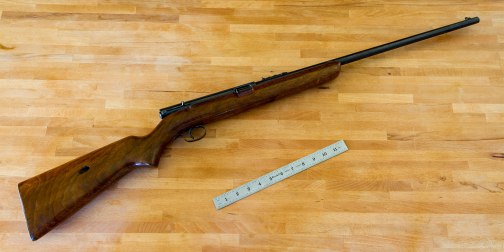
  1. Winchester Model 74 .22LR  $250   SN 266271A – manufactured in 1950
37 Win-Mod-74-.22LR-1

This was a go-to rifle for shooting squirrels, rabbits, and sparrows, plus lots and lots of cans. This is a semi-automatic – you gotta pull the trigger each time you want to fire, but it is automatic loading.

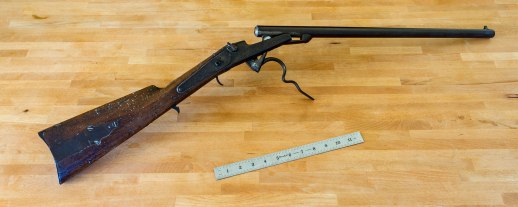
  1. Gallager Carbine SN 6196  .56-52
38 Gallagher-Carbine-2 - Copy

Remember the TV show, The Rifleman? No, too bad. It was a great show about this guy, the rifleman, with a modified Winchester .30-30 that he could shoot like an automatic. I used this rifle to play the Rifleman. It was the only one with a lever.

This is a Civil War period rifle that was chambered for the Spencer 56-52 cartridge. It has a cartridge extractor and a firing pin design instead of a percussion nipple. Many of these carbines were bought by France and used in the Franco-Prussian War. It is a single shot design where the barrel moves forward to load. Less than 25,000 Gallagher Carbines of all designs were ever produced. It frequently would jam with the expansion of the brass cartridge, which prevented extraction. The hammer on this one is missing. With the hammer could be worth $3,000.

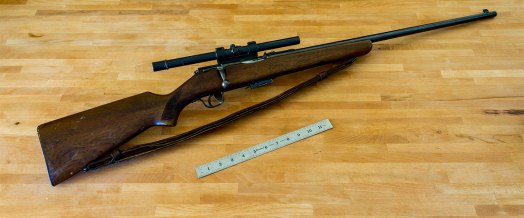
  1. Savage Sporter Model 23D SN 222615 
39 Savage-Sporter-1

This one’s a Pre WWII Savage Sporter .22 Hornet bolt action with a Weaver G6 scope and has the original leather sling. I used this rifle for hunting rabbits and squirrels and for shooting sparrows off the barn power lines (sparrows are a trash bird and can ruin a bin of grain). One day, I was going from the red house to Grandpa’s place to help with shipping a load of hogs to market. It was just after sunup and there had been a hard frost. The window on my Cougar was completely frosted, and I was late. I scraped a hole I could see thru, then jumped in and headed out with the defroster blasting cold air. It didn’t heat up appreciably in the mile to Grandpa’s. As I was heading to the Pig Palace, I saw a coyote running across the field. I stop, grab the Savage from the back seat, lean across the roof, draw a bead on the coyote, and squeeze a shot. I must have bumped the scope when I put it in the backseat in my hurry to leave. I hit the coyote in the rear end, which stopped him in his tracks but did not kill him. So I had to get closer to dispatch him, and the entire time he was looking me directly in the eye. It was hard to shoot him with him staring at me like that but I had no choice at that point. It was the last time I shot that rifle and the last critter I killed. So to answer the person on Facebook, who does not know me, who ranted that I, as a gun owner, “was part of the problem”, I submit that you as a narrow minded “Chicken Little,” are the REAL problem. So up yours!

  1. Ferd Percussion (cap and ball) Musket SN 860
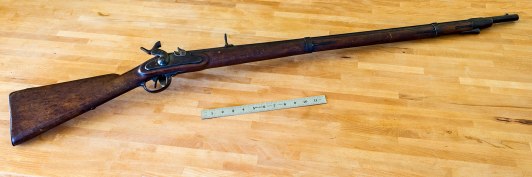
40 Ferd 1

This was a fun one to play with. It is looong and not too heavy. It cocks and has the ram rod. I was a regular Davey Crocket and of course I had to wear my official Davey Crocket coon skin cap when toting this in the hills killin’ bad guys. To date, I have not been able to find out anything about this musket.

  1. Kentucky style flintlock converted to percussion (cap and ball) No SN
41 Kentucky 1

This RW Booth musket weighs over thirteen pounds. It has two birds and a bird dog engraved behind the hammer. There are two triggers, called a double-set trigger. You pull the rearmost trigger to set the front trigger which has a very light pull. Given the double-set trigger, length of the rifle at five feet, and the weight, I think this was primarily a target rifle. It would have had a forked monopod to rest the barrel on to steady it for firing. It was probably originally a “Kentucky” style Flintlock Long Rifle that has been converted to percussion. The barrel is larger in diameter than a quarter. That may not sound like much but make that quarter five feet long and made of iron and you get the picture.

  1. Cap and Ball Musket no SN
42 Cap and Ball 1

Hey, it’s a firearm! Another from my Grandfather’s collection, but I never played with this one only because there were so many others that were way cooler.

  1. Stevens Model 15A  Savage Arms Co  .22   No SN
42a-Stevens

This was my first rifle, a single shot .22 short, long or long rifle. It was a Christmas present I think when I was 12. I still have the box it was shipped in to Ernst & Son Hardware in Lawrence from Gem State Sporting Goods in Mountain Home, Idaho. I have no idea how Dad located this without google!

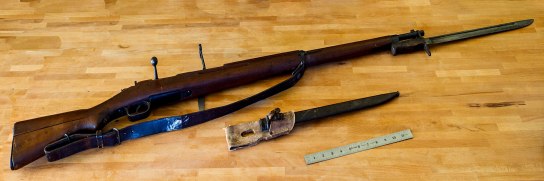
  1. Japanese Arisaka Type 38  5 x 50mm SN  
43 Arisaka-4

My dad “took this off a dead Jap” during WWII. Please do not chastise me for the language, which is what he used at the time! He got permission to bring it home after he was wounded on Saipan. He was in a foxhole with two buddies when a hand grenade was tossed into the foxhole. His two buddies were killed and essentially shielded Dad who took shrapnel in three places. It is a Mauser-style bolt action with a 5-round staggered box (magazine). The sling and bayonet are original.

  1. The Rat Killer
44-20160704_8016

Ok, it used to be a long gun! This is a 12-gauge shotgun. The barn had a rock foundation, and rats would get in the cracks between the rocks. I would take this monster and creep down the stairs to the barn basement. It was fairly easy to sneak up on the rats as they were not afraid of anything. I’d point it in the general direction and hold on like crazy. The noise while halfway down the stairs in the basement was like a cannon blast. My ears would ring for hours. Damn, it was fun!

This is the highly illegal one I mentioned in the U-Haul above. It has since been disposed of. I have mentioned earlier that Dad’s best friend, Fred, was the Sheriff of Douglas County. He and his son Mike, my other best friend, were with us at Grandpa’s and we were talking about guns. Dad brings this out and Fred says, “Shit, Ren! You gotta get rid of that thing! I’ll pretend I didn’t see it.” Then of course, we all had to shoot it. Hold it straight out in front of you, pull the trigger, shoulder gets dislocated, and arm now is pointing straight up. Not to mention deafening. Fun stuff!

  1. .30-06 and 12-gauge Winchester Pump Shotgun
45 30-06

We also had a .30-06 and a Winchester pump shotgun. These were both beautiful guns and I have no idea what became of them.

  1. The 7mm Mauser with thumb-hole stock
OLYMPUS DIGITAL CAMERA

I would go to gun shows with Chuck and became a decent gun trader, given my first-grade training at swapping. I acquired a 7mm Mauser. It was a run of the mill rifle in great condition. Then I found a stock blank, which is generally a hunk of wood in the general shape of a rifle stock. It also happened to be crotch black walnut, which means it was cut from a black walnut tree at the area where a branch grew from the main trunk. This makes incredibly beautiful wood when finished and polished. There is grain running both lengthwise and crosswise. I spent hours and hours cutting the groove for the barrel and space for the trigger assembly. Then, when the rifle finally fit, I started carving the thumb hole and grip for my hand. The finished piece was a work of art. I loaned it to a relative who loaned it to one of his relatives, and I lost track of it – primarily because I had left for California and the Navy.

  1. Saving the BEST for last, the Spencer Carbine
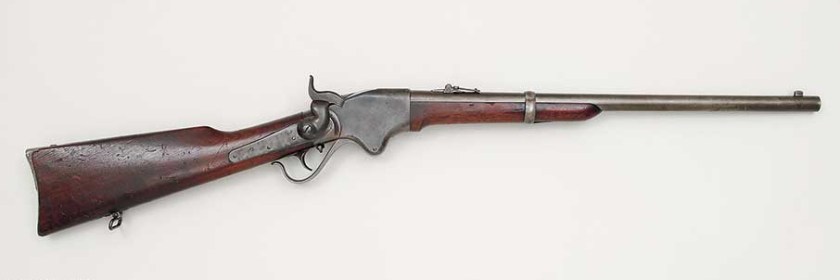
47 spencer-1

The absolute premier rifle in the collection was the Spencer Carbine. This rifle now belongs to Lee who, when Dad died, said he would like to have one of his Grandpa’s guns. This is the “musket” he chose. Wise kid!!

“Actual Civil War-issue specimens are serial numbered from 11,000 to 61,000 (since Lee has this rifle, I do not know the serial #). More rugged than the Henry, the Spencer was more suitable for cavalry and had more firepower than any standard U.S. service weapon until adoption of the 1903 Springfield. The Spencer is a superb collector’s item and should be an excellent investment.

47a Spencer 3-J.G.-hs-Underlined-52-rounds

“The Spencer carbine is chambered for a .56-56.It replaced the muzzle loading rifled muskets of the time. It was a key factor in the battle of Gettysburg by Custer over Stuart and the pursuit of Lee until he escaped over the Potomac.

“Troops armed with Henrys and Spencers would often fire a volley then wait. The enemy, thinking they were reloading, would attack across the open, only to be greeted by a hail of lead from the muzzles of the repeaters.

“General Porter Alexander, CSA Artillery, commented that if the Union would have adopted repeaters in large numbers, the war would have ended within a year or two at the most. What the military would not accept was the fact that the Henry and Spencer made single shot weapons obsolete for regular army use. Their failure to adopt a repeating rifle sooner cost many soldiers their lives.

“It was replaced by the trap-door Springfield 45-70. The 1873 Trapdoor Springfield, although an excellent and durable weapon, was outdated when it was introduced. Even though it had greater range with its .45-70 caliber, the common soldier had very little target practice and was unable to hit targets consistently at ranges beyond 150 to 200 yards, the effective range of the repeaters. So the trade-off of rapid fire for greater range was a poor trade.” Author unknown.
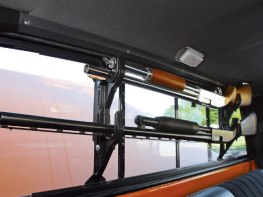
48 easy rider rifle rack

Then of course, there was the ever-present easy-rider rifle rack in the pickup.  It always had at least one rifle and quite often two. We would go to town (Lawrence) with rifle(s) in the rack, go to the CO-OP, hardware store, and those places farmers tended to patronize, and leave the truck unlocked. Guns or no, I do not remember ever locking the cars or trucks when we went somewhere. Different times they were!

I reckon ya’ll are full to the gills with gun talk so I will wrap this up with one last short story about Grandpa stuff

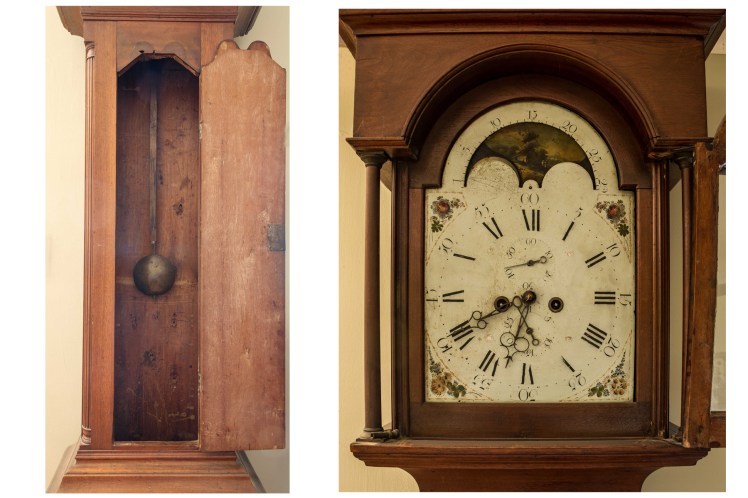
The Grandfather Clock
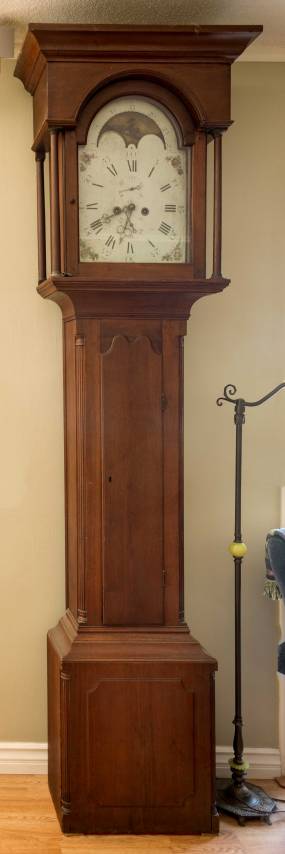
20170410_2592

The story goes that this clock came to Kansas in the back of a covered wagon — sounds reasonable to me. It is eight feet tall and has hands for the hour, minute, second, AND days of the month! Most tall-case, long-case, or floor clocks, as they were first known, only have hour and minute hands.

In addition, it has the four seasons! It is a dual-weight, eight-day clock, only requiring winding once a week, and has a pendulum-driven  timepiece that was the world’s most accurate timekeeping technology of their day.

The origin of the term “grandfather clock”: The Oxford English Dictionary states that the 1876 song My Grandfather’s Clock is responsible for the common name “grandfather clock” being applied to the longcase clock. This all occurred in The George Hotel in Yorkshire, where an American songwriter by the name of Henry Clay Work discovered a long grandfather clock. When he asked about the clock, he was informed that it had two owners. After the first owner died the clock became inaccurate and when the second owner died, the clock stopped working altogether. The story inspired Henry to create the infamous song. Wikipedia
Untitled-1
20170410_2595
20170410_2596

This clock lived in the dining/living/quilting/canasta room next to Grandma’s rocking chair. When Dad moved it to Uncle Herb’s place, it stopped working. I moved it to California in the U-Haul and it sat silent in the Sunset house. One day John DeBlanc saw it and asked if he could take it to his clockmaker to see if he could get it running again. John had hundreds of clocks. His clockmaker had it for several months, then one day John showed up with it – and it worked. Then the time changed with daylight savings so I figured I’d re-set the clock. Wrong. Much to my chagrin, it has not worked since.

Next I’ll talk about horses and building stuff.
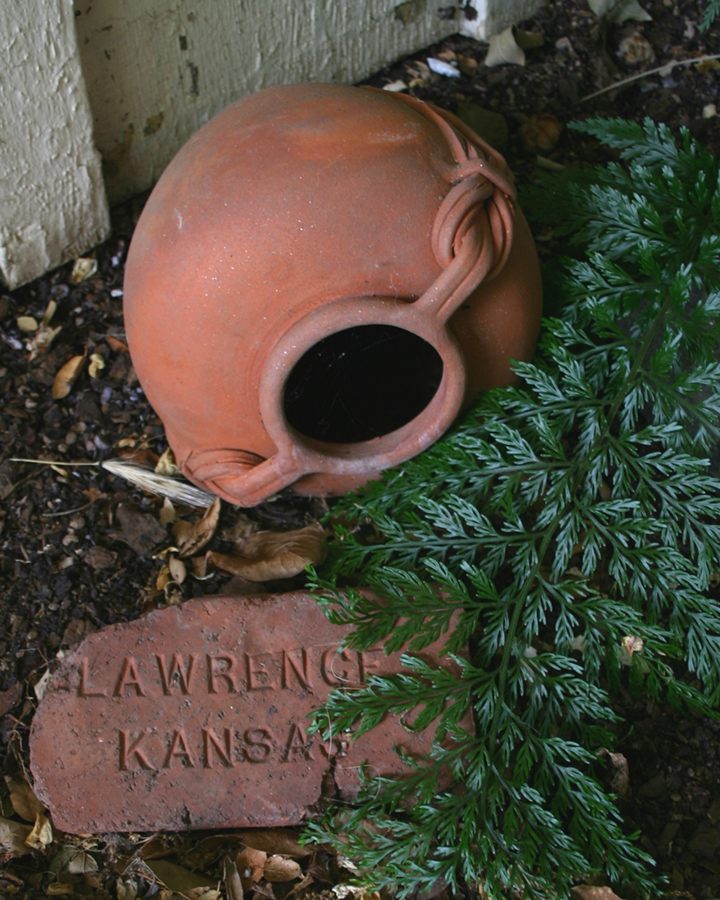
Around Lawrence

Lawrence Brick

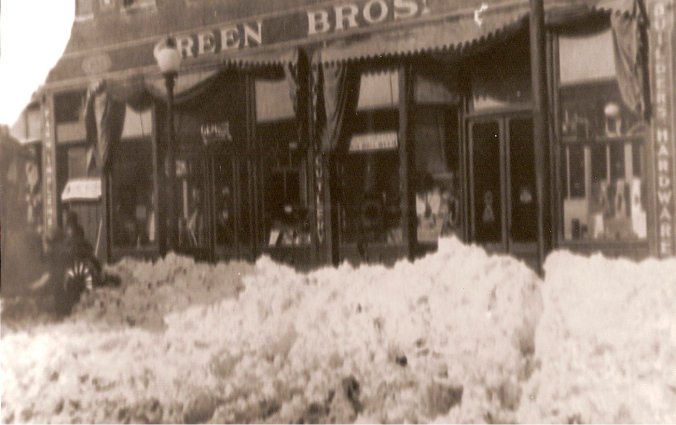
I think there was only one time that I actually went shopping with Dad. I was about eight. We would go to the hardware store, CO-OP, Midland Store, welder (when it was too big a job to do ourselves), John Deere Dealer, and mechanic (usually for cars), but never shopping. I had gotten some cash for X-mas and wanted to get a car for my train set. We went to Ernst & Son Hardware store, which is unusual in that we usually went to Green Brothers Hardware store.

4 Green Bros Hardware

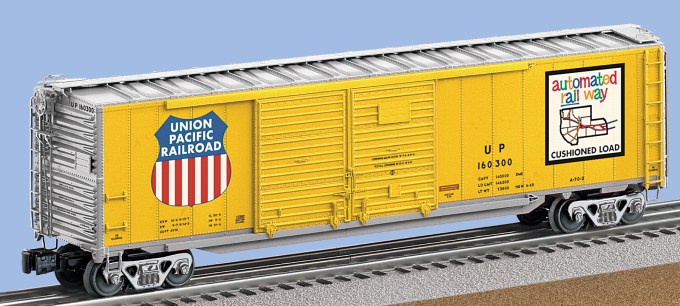
Bill Green, half of the Green Brothers, was mentioned in installment one about the scorpions. Bill and Venita were some of Mom and Dad’s best friends. Unfortunately, I could not find any good photos of the inside of their store. It was THE coolest hardware store I have ever been in! But they didn’t carry train cars, so we went to Ernst & Son which was a hardware and toy store. I found a great yellow box car for carrying ice blocks.

1 6-17282_1707

It had about 10 ice blocks and a chute to load them into the boxcar. The one I wanted was on display on the wall. When Mr. Ernst brought the box out I inspected the car and said I wanted it. He told me the price and I asked why it was more than the one on the wall. Dad didn’t say a word. Mr. Ernst stammered, but could not offer a valid explanation. I told him I wanted the one on the wall at the price displayed. He sold me the new one in the box at the displayed price. My train set was set up on a 4×8 sheet of plywood and sat on saw horses in the basement of the red house. It was a simple figure eight with a side spur for the ice boxcar. I had the train set for several years until I gave it away. One of Dad’s hired hands had three sons who were all younger than me. The family was dirt poor and I asked Mom and Dad if I could give them my train set. The boys were ecstatic! So was I. Giving that train set to three boys who literally did not have anything was an amazing experience for me. The basement then became the site of the ping pong table. I never could beat Dad, however, Mike and Jennie were no problem.

Basement Shower

The ping pong table in the basement reminded me of another story. We had a shower in the basement where we took showers after coming in from a day at work. We could get really, really dirty so we would shower there before going in the house. One evening I was in the shower where there were two huge oil tanks for heat. The tanks were raised a foot off of the floor. They were about five feet tall and six feet long. In the middle of my shower I glanced at the top of the nearest tank…

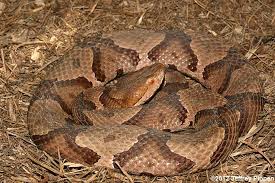
At the top, about three feet from me, sat a copperhead that was about two feet long – an adult. No, we did not catch and release.

Copperhead

Water Filter

Since we are in the basement…Our water came from a well across Mud crick. It was pumped to the basement into a large cistern. There were three cisterns or tanks – I do not know a better word for them. They were each about four feet square and about five feet high and were made of bricks. The bricks between the first and second tank were soft, and the bricks connecting the second and third tank were softer yet. The water was pumped into the first cistern or tank then percolated through to the second tank and then into the third. The well water was crystal clear, clean, cool, refreshing and delicious!

Remote control bulldozer

The coolest toy I ever had was the remote control bulldozer. Mine was a Caterpillar and it was yellow.

16I am not sure where Dad got it but it was in my pile one X-mas. Santa would sort our presents into piles by person. The piles were positioned so that we could not see them from the stairs and none of the presents from Santa were wrapped. We had to sleep upstairs on X-mas eve so we could not spy on Santa. We usually woke about 6am X-mas day and and would come downstairs and stop on the bottom step. Oh how we wanted to peek around the corner, but oh how we knew better! That was the first step. Once we finally woke Mom and Dad we had to wait until Grandma and Grandpa arrived before we were released from the stairs. It always took them FOREVER to get the mile from their house to ours. Fast forward about thirty years…There are three steps to the living room in the Donee Diego Drive house and we, rather I, as Tracey thought it silly, made the kids sit on the steps on X-mas morning waiting for Grandma Cloyd. They hated it. I loved it!

Coonskin cap and chaps

The third coolest thing I had was a coonskin cap, aka Daniel Boone.  

19 daniel boone

(The absolute best was the bike in installment one, but it really was not a ‘toy’ and second was the train.) Daniel Boone really did not wear coonskin caps. He thought they were unstylish so he actually wore a beaver skin cap, but it was a marketing thing.

Right behind the coonskin cap were my Hopalong Cassidy chaps,

which I still have. Hoppy, as he was known, did not wear chaps and I do not know why mine were Hopalong Cassidy chaps, but they were!

Central Junior High

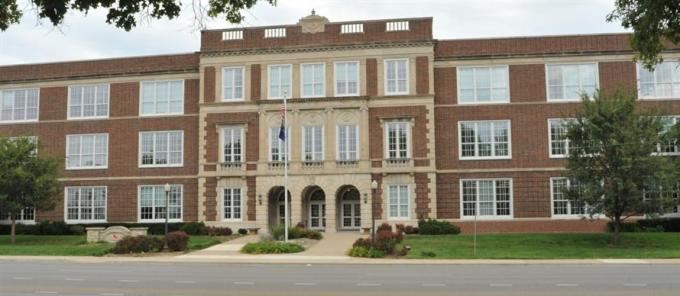
Since this has involved stories about Dad, I remembered a couple of shenanigans he was known for. When he was in high school, which became Central Junior High 13 Central

when the new high school was built, he and several of his friends carried a teacher’s car (I think it was a Model T), upstairs and put it on the roof. Another great story was that he and his friends would get in drag races then speed across the Kaw bridge to North Lawrence then wait for the cops to get there to chat with them. Ok, they didn’t ‘chat’ then they shot-the-shit. The cops did not have jurisdiction in North Lawrence so could do nothing.

Weaver’s Department Store

Shopping with Mom was a different matter. I usually got drug along when I needed new clothes, which I just loved to shop for, not. Her shopping trips usually included a stop at Weaver’s Department Store. Weaver’s had an elevator that had an elevator operator, which made shopping a bit more bearable.

elevator operator 3 elevator 18 elevator

 The store had four stories, including the basement so the elevator was really a luxury. The operator would call out the floor and what could be found on that floor, as if we did not know. One time I was “being a pill”, which was one of Mom’s favorite monikers for me. We were on the operator operated elevator and Mom was pissed. She slyly pinched me on the butt, which was her favorite thing to do when I was being a pill. I said, probably quite loudly, “Stop pinching my butt”! After turning several shades of red, she stopped, but I got a royal tongue lashing when we got outside. One did not mess with Mom without consequences!

Round Corner Drug Store

When I was older, maybe 10 to 12, I got to take Larry Tripp along several times. We were ‘older’ so could go out about town on our own and would go to the Round Corner Drug Store for a soda. It has a round corner and is still there. It had a café/soda shop with these cool red swiveling stools. Larry and I would get sodas with plain water instead of carbonated. The soda syrup was in bottles and the water or carbonation was from a tap, like a beer tap. I am sure the plain water was Larry’s idea.

Ice House

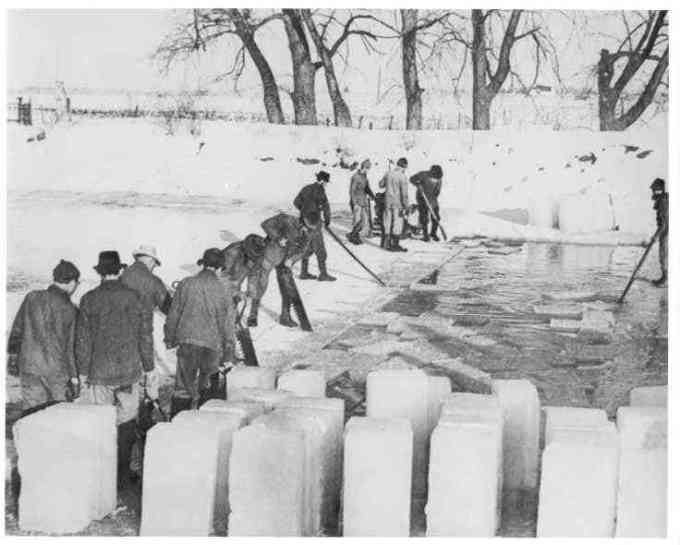
Since Lawrence is the subject of this installment, I will tell about how we got started farming. One of our family had an ice house on Vermont St.

They would drive a team of horses onto the frozen river, 21 Harvesting Ice

cut huge blocks of ice,

22 Ice Saw     23 Ice Hook

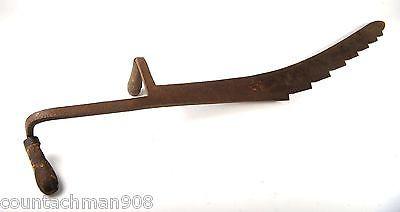
(both of these tools hung in Grandpa’s barn for years)

20 Harvesting Ice

then drag it to the shore and load it on wagons. It was then transported to the ice house where it was stacked in layers of sawdust. This would keep it frozen well into summer. A bank was trying to get started in Lawrence and they went to our family to borrow funds. They repaid the loans by giving us the deeds to the property in Jefferson County. The original farm was one-mile long by one-half mile wide. It was divided between three brothers, Grandpa, Uncle Herb and I cannot remember who got the third, but it ended up with Uncle Buggy. His name was Earl Bussing and he got his nickname because he was known for having fancy horse buggies. Before he died Dad used to complain about how fast he drove, “like a bat out of hell.”

Underground Railroad

Lawrence was known as an abolition town and along with many other cities in Kansas served as a stop on the Underground Railroad. The UGRR was a network of imaginary routes not found on the railway guides or railway maps. Freed slaves were carried from station to station till they reached the Canadian line. Slaves arrived via the railroad or were escorted by the likes of John Brown and went from the Bowersock dam via tunnels under Massachusetts St. to various stations or safe houses.

Mark’s Jewelry Store

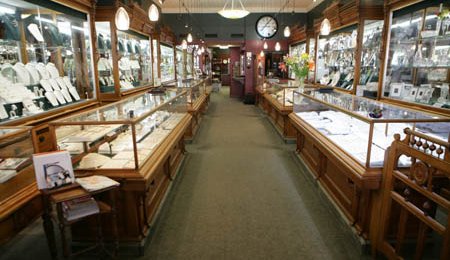
One of the stops frequently made when we went shopping with Mom was Mark’s Jewelers.

5 Marks Jewelers

One time Mr. Marks (Sol Marks the original owner) took us into the basement, which he said was a station on the UGRR. The basement was a bar right out of the old west. It was magnificent! It was made of dark, almost black, wood with incredible woodwork. I recall these big, fancy, round posts on each side of this huge mirror with shelves on each side for all of the bottles. The bar had a gently curved edge about 8” wide for resting your arms, then a flat area about 18” wide with a 4” wide tray on the bartenders side. To get an idea of the elegance of the bar, look at the photo of the jewelry cases above then multiply that by about a hundred!

Quantrill’s Raid

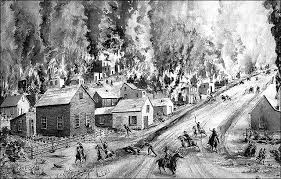
Jayhawkers were guerrilla fighters who clashed frequently with Border Ruffians, pro-slavery groups from Missouri. The Lawrence Massacre, more commonly known as Quantrill’s Raid, was one of these skirmishes. Quantrill's RaidThe motivation for the raid was to plunder and destroy the town in retaliation for the Union attack on Osceola Missouri. Between 300 & 400 raiders arrived in Lawrence about 5am, captured the Eldridge Hotel as Quantrill’s headquarters, and then burned about a quarter of the buildings in town including all but two businesses. They looted the banks and stores and killed between 185 and 200 men and boys. On their way out of town they burned the Eldridge Hotel.
We have a cradle that was in the Eldridge Hotel and survived the raid and the burning of the hotel 7 Shultz Cradle 3

Several generations of Shultzes slept in that cradle.

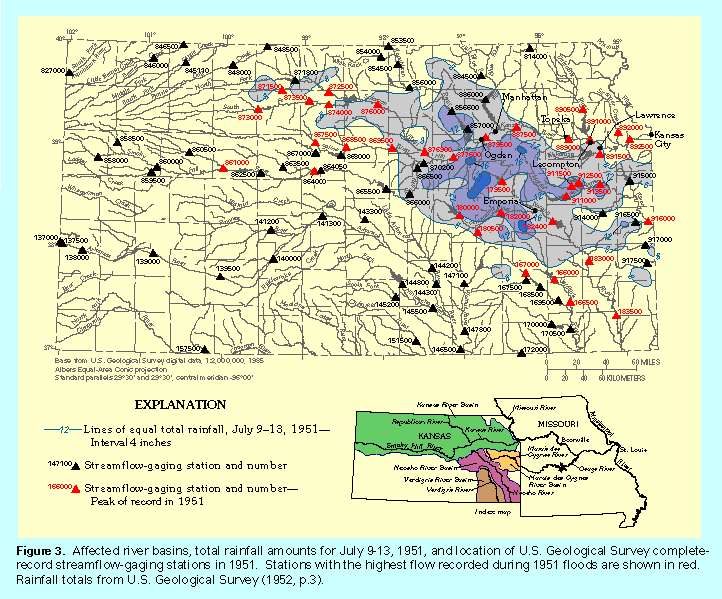
Worst Flood in US History

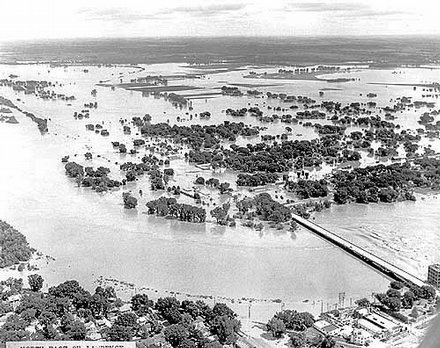
1951 saw “The Great Flood”, or ” The Flood of the Century”. 24 Flood

The Kaw (Kansas) River, and four others, flooded – big time. Lawrence,8 1951 flood

Topeka, Manhattan, and Kansas City were all flooded as were many small towns in Kansas. Seventeen lives were lost and 518,000 people were homeless. Damage at that time was $935 million, or $8.52 Billion today.

The flood started in Hays, Kansas in May with eleven inches of rain falling in two hours. Heavy rain continued into June and July with sixteen inches falling between July 9 and 13. (for the record, I did not remember that, I googled it.)

The underpass on the North side of the river was flooded to the roof of the underpass. The railroad tracks atop the underpass were above water. We took a boat to Rusty’s IGA grocery store. This is the grocery store where Mom always shopped. It had a kid’s area that was like a big sandbox filled with – wait for it – comic books! I loved to go grocery shopping and would sit and read comics while Mom shopped. One day it seemed to be taking her an unusually loooong time. I got up and explored the aisles, but couldn’t find her. Then I went outside and our car was gone! I stood there wondering what to do for a few minutes then figured she knew where I was so went back in and read some more comics. Mom had gotten to about Midland store, maybe five miles away, before remembering that I had been with her. The ice cream was softened perfectly when we finally got home. Back to the flood…On the East side of Rusty’s parking lot was an eight-foot cement block wall that Larry and I sat on. The water was about three feet below us so we could not quite dangle our feet in the water.

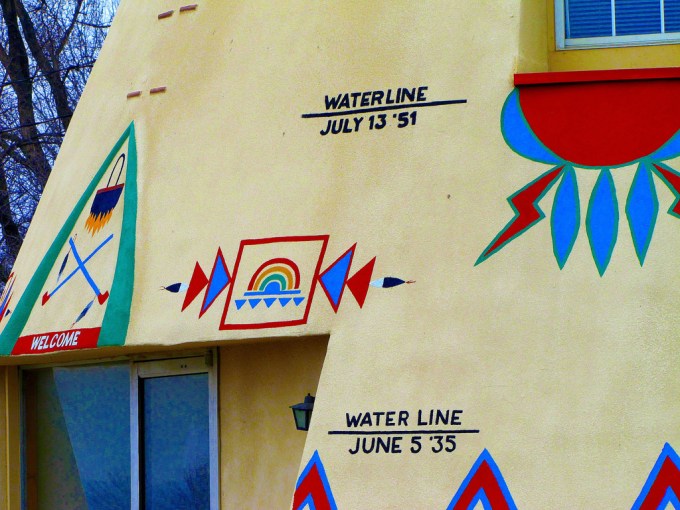
North of Lawrence at the junction of US 24 and 59 is a fifty-foot-tall concrete Tee Pee.

12 Tee Pee 2

You can see the high-water marks.

11 Tee Pee 3

This later became the go-to place to drink and dance.

10 Tee Pee 1

Well, one of the go-to places.

Jefferson County Fair

The year after the flood Dad “gave” me an acre of land that had been under about four feet of water. It was the first field over the Douglas/Jefferson county line on Wellman Road and right by Mud Crick. There was a ton of silt left by the flood waters. Combine that with a very generous helping of fertilizer and the resulting corn was a bumper crop to say the least. We picked several gunny sacks of corn and carefully sorted through it one ear at a time to select ten ears to enter in the Jefferson County Fair. Those were carefully sized and cleaned of all silks.

9 corn

 The result was a blue ribbon!

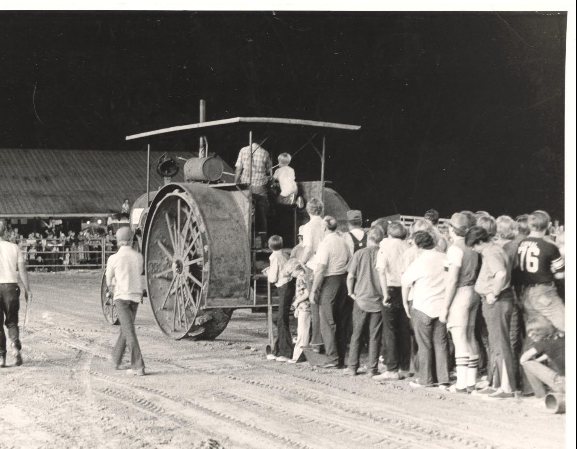
One of the highlights of the fair was the tractor pull.9a aultman taylor pulling sled 1973

I do not recall any steam powered tractors like this and unlike today’s tractor pulls, that feature hot rod tractors and fancy pulling sleds, the tractors then were stock and right off the farm. The sled was a flat piece of thick metal about eight-feet-wide and maybe twenty-feet-long with a chain on one end and a bar about four-feet-high running down the center of the sled to hold onto. Men lined both sides of the track and as the tractor passed them, they would step onto the sled. That continued until the tractor could not pull any more men. I never got to step on the sled.

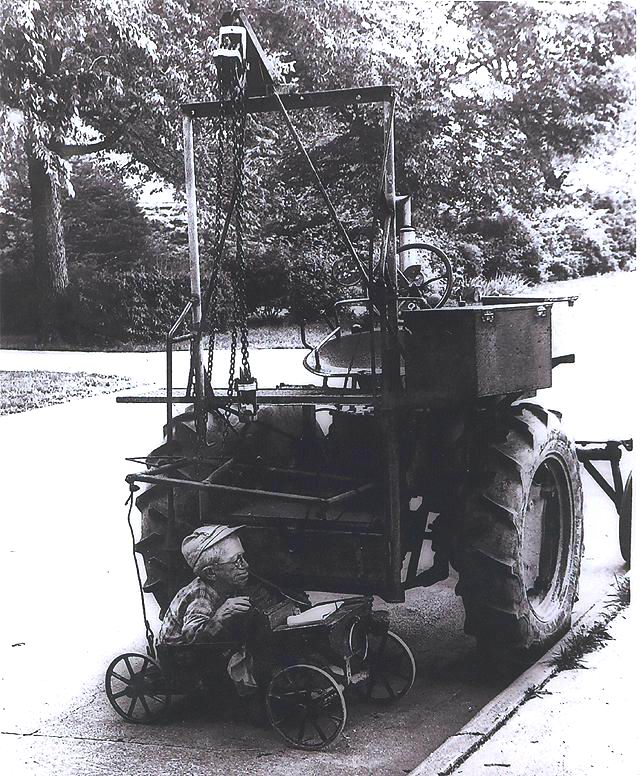
Leo Beuerman

Leo was 38” tall, deaf and eventually blind.

14 Leo Beuerman 2

15 Leo Beuerman 1

Despite his physical limitations, he was not one to indulge in self-pity but was determined to be self-sufficient. He wanted to be independent so he built a cart and had a tractor converted to be operated entirely by hand so he could transport his cart from his home on a farm the eight miles to downtown Lawrence. There he sold pencils, pens, and other items. I bought several pencils from him. He also sold watches and repaired watches and clocks. He could talk, but it was difficult to understand him, so he mainly communicated by writing on a pad of paper.

In 1969, a film by Centron Films, “Leo Beuerman” was nominated for an academy award and in 1970  received national and international film festival awards.

He was very intelligent, although not formally educated. A couple of his quotes:

”An action need not alter the course of human events to become heroic.”

“Courage is a factor in many activities which are seemingly insignificant.”

And from his autobiography, “I think everybody is lonesome and feels sorry for themselves at times, but I never did believe in being a quitter. If one thinks it all over and sees a way through, let nothing stop you until you get what you set out for.”

Next: Guns and Stuff

Grandpa’s Barn

Installment Five

https://www.youtube.com/watch?v=IRHmxIu_Ez8

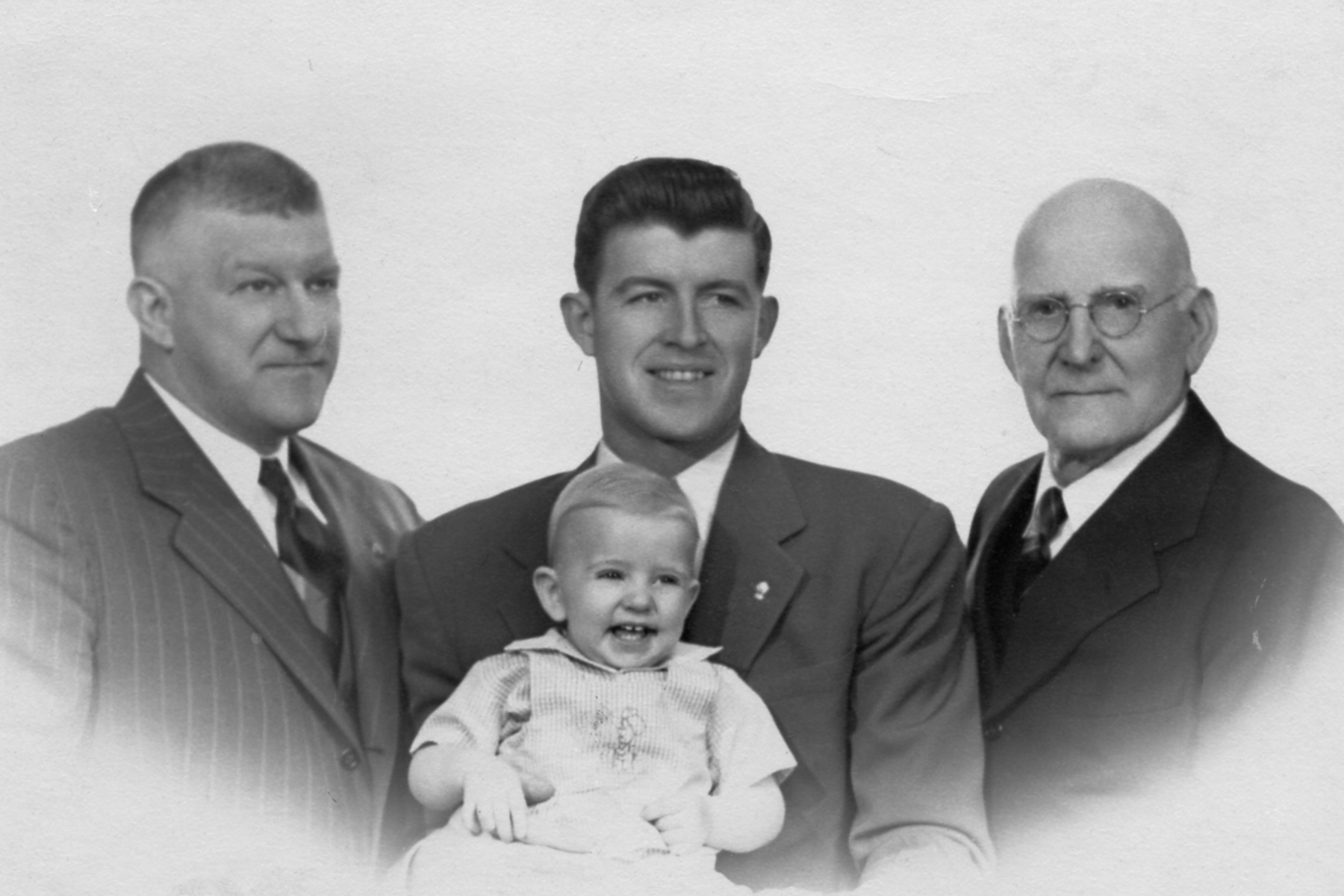
Four Guys 

Four Generations.25-four-generations055Grandpa is on the left and Great Grandpa, whom I do not remember, is on the right. You can see that Grandpa really was a big man. I am not the fourth because Grandpa’s middle name is Edward. Technically, I am a junior but since I am the third Guy Reynolds that is what I claim. So there.
I suppose I should explain why we chose not to name Douglas “Guy the fifth”, or some variation of Guy Reynolds/Edward and I will do so…in installment #12 so stay tuned.

BIG man

Grandpa was a BIG man. (Refer to four generation photo above.) It is said that everyone who knew him, which was everybody, knew to jam their hand completely in his when he offered to shake hands otherwise he would put you to your knees. Grip of iron. Evidently a firm handshake is something that needs to be taught. It is also well known amongst his friends that he could carry five 90 pound cement bags. One under each arm, one in each hand and one in his mouth. One day Grandpa and I were going to the Coop in the big truck to deliver a load of wheat. I was maybe eight at the time. We had to go thru Lawrence, down New Jersey St, I think. We passed a man, poorly dressed, walking down the sidewalk, bent over, shuffling along, steadying himself with a cane. I said, “Grandpa, look at that old man!” Grandpa reached over and put one of his huge hands on my knee and I am thinking, “oh man this is gonna’ hurt” when he said, “Son, I know that man and he is only 50 years old”. (I thought, I was right! He is OLD – told ya, Grandpa knew everyone) With monster hand firmly on my knee, just waiting for the excruciating pain of the squeeze I knew was coming, he continued, “Remember this boy, you are only as old as you think you are.” Not only was he strong, he was smart! And I remember that day like it was yesterday. I didn’t get the excruciating squeeze I thought I would, but an uncharacteristic pat.

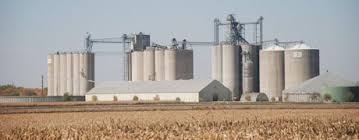
The Co-op we were going to was a grain storage facility for,

 23-images

and owned by, farmers, and which I now know was one of several ‘training runs’ we made in the big truck in preparation of me driving several times a day, beginning at age fourteen. Believe me, I watched everything Grandpa did to herd that monster truck thru town. The Co-op was a drive thru so we didn’t have to back in, although that wouldn’t have been a problem for me. Several years later Dad had a new grain storage barn built that would store about 30,000 bushels of grain, plus the combine, trucks, tractors, crop sprayers, tools and the other stuff it took to run a big farm operation. At one time Dad had about 2,000 acres under cultivation, most of it rented. I know he wanted me to take over the farm, to be the third generation to run it, but he told me several times to “do whatever you want, but do it the best you can.”

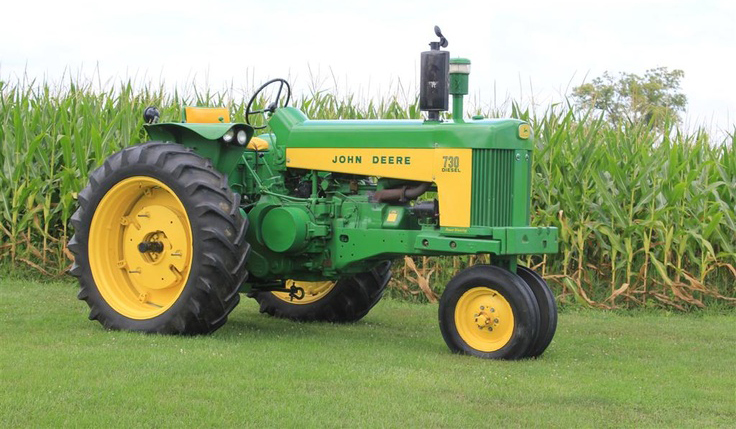
The 730 was diesel and John Deere tractors had vertical mufflers that were just about head high so no matter which way the wind was blowing, the diesel fumes came right back in your face. To this day I hate the smell of diesel.

26-four-bottom-plow

Getting up at dawn, inhaling diesel fumes for hours on end, mind numbing boredom going back and forth in a field on a tractor for days on end, pulling hay bales to the rafters at the top of a hay barn that was probably 120 degrees, soaked to the bones with sweat, and working till midnight on many, many days, I knew I did not want to work that hard. (so I ended up in sales, at which I was a natural having trained by swapping stuff, and ended up working sixteen hour or longer days–, but the only sweat was mental.)

Grandpa’s Barn

Grandpa’s barn started out as a hay barn then Grandpa & Dad converted it to a grain storage barn. 1-20160801_8198Drawing by Orin Olson

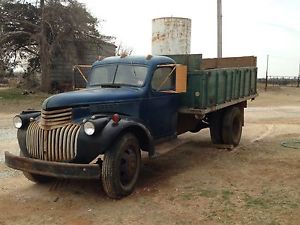
The barn and elevator system were designed by Grandpa. The barn entrance was about ten feet wide, two feet wider than the big truck –3-46-chevy

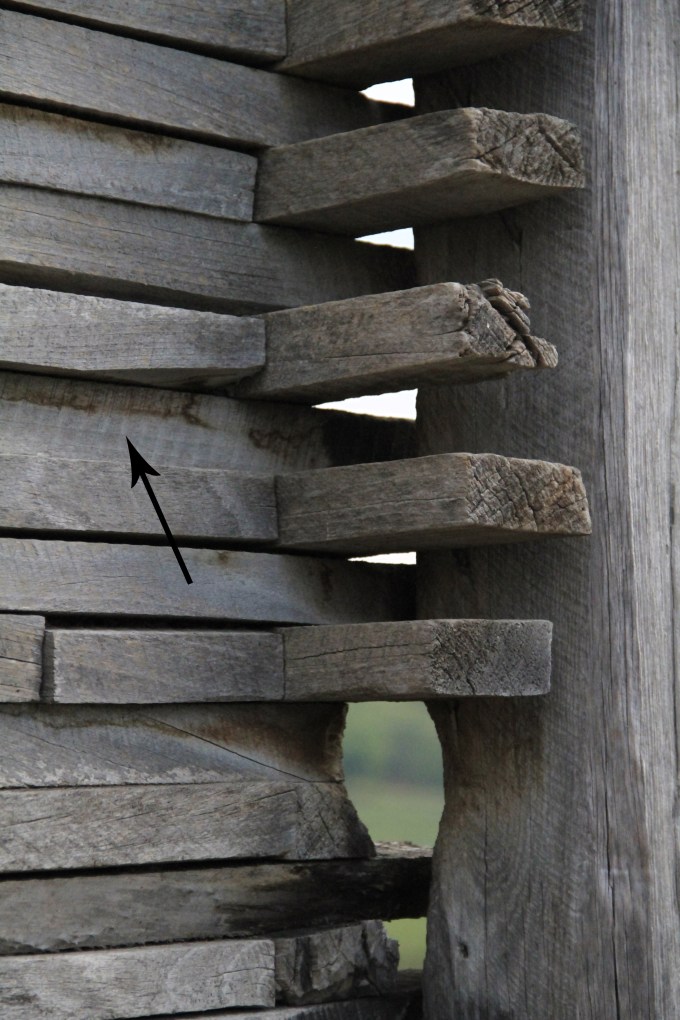
–  which I began backing into the barn at fourteen. The grain bins were made from rough cut native oak 2×4’s laid flat and overlapped at the ends.

2-20120914_9431a

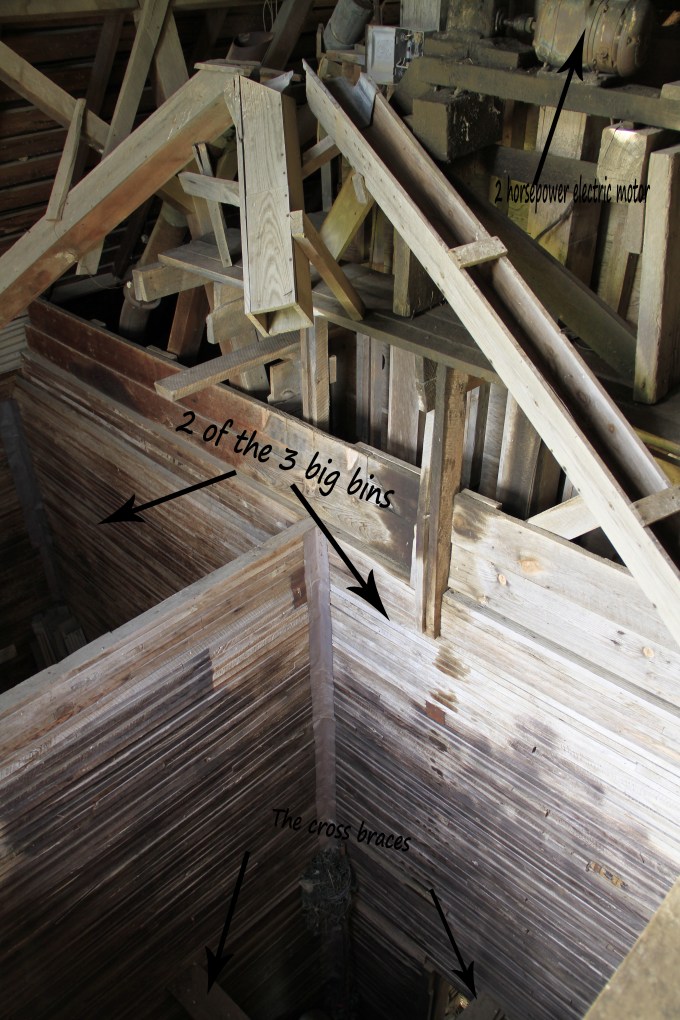
The bins were probably thirty feet high by twelve feet square. There were four 2×12’s, laid flat and stacked atop each other, two bisecting the bin one direction and two perpendicular to those.

You can just see the ends of the cross braces in this photo.8-20120914_9606a

These were to keep the sides of the bins from bulging outward when filled with grain. They were about ten feet from the floor, which means there were about twenty feet from the cross beams to the top of the bins – from which we would jump into the corn, wheat, soybeans, etc. Recalling the bin dimensions, you can see I had a six by six foot square to hit from twenty feet up to avoid hitting one of the cross braces. With a vertical landing, legs together, knees straight, I would be waist deep in the grain. Doesn’t sound like much, but it is very difficult to wriggle out when half buried in the grain! But it was tons of fun! It was not without danger though. When emptying the bins one never got into the grain. The grain emptied thru a one-foot square hole in the floor, and the steady movement of the grain was impossible to climb against. Whoever was in the grain would be sucked under and would suffocate.

Elevator Belt

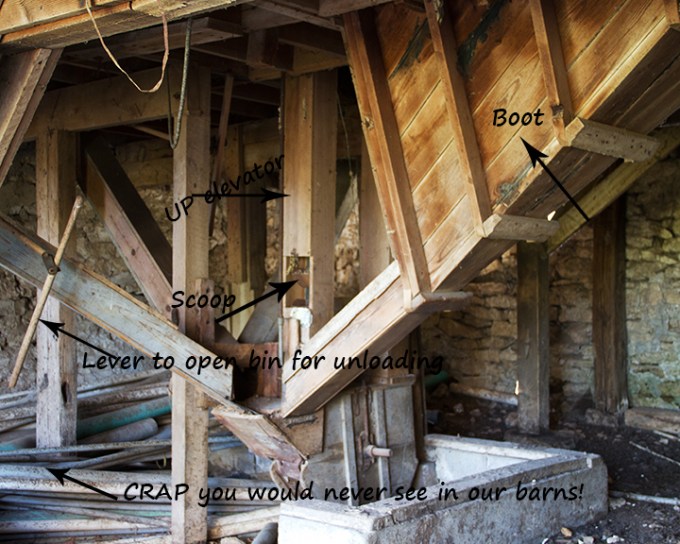
The truck was backed into the barn until the back of the dump bed was even with the “boot” in the floor. This meant the truck was almost completely in the barn and you had about eight inches of clearance with the truck door open to get out of the cab. It was a tight squeeze, and probably why skinny me, at 5’10” and 140 lbs, was the driver. The boot was a two foot by six foot hole in the floor. The bottom of the boot slanted down to direct the dumped grain to the elevator. 4-shultz-4-9617The elevator to get the grain into the bins was a six inch wide belt with a metal scoop riveted about every foot. The scoops probably held five or six cups of grain. The elevator belt was a loop that went from the basement of the barn to the top, so maybe fifty feet long.
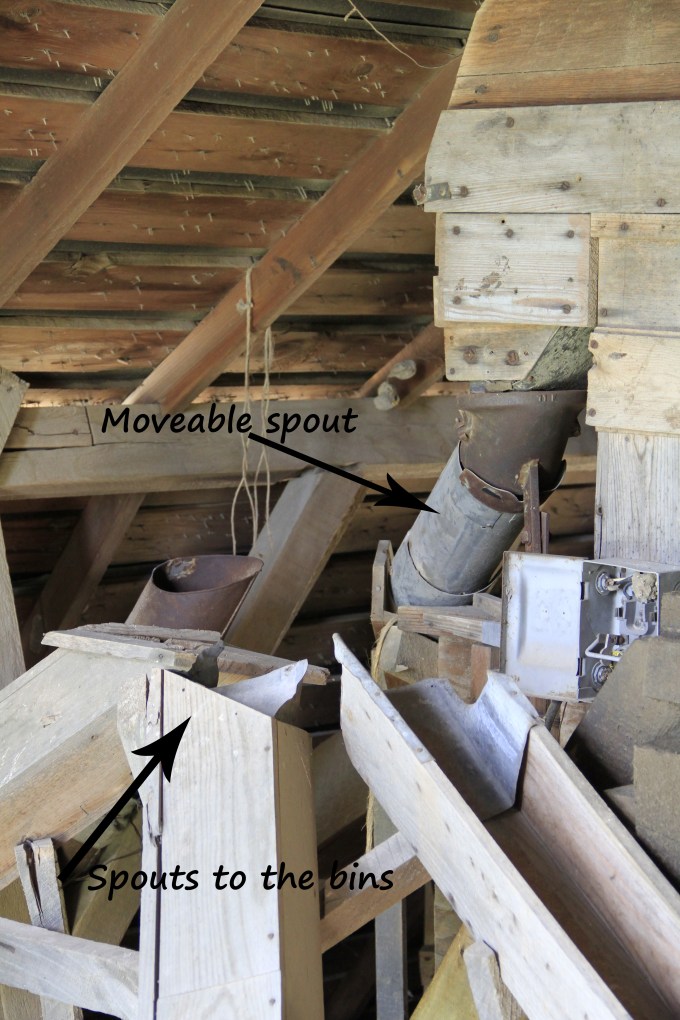
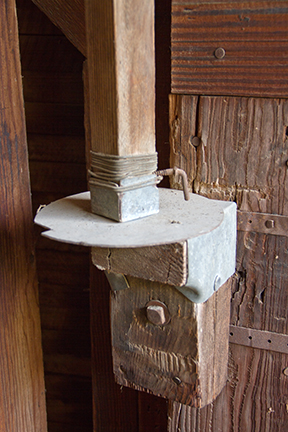
At the top of the elevator was a moveable spout 5-20120914_9608ato direct the grain into the seven different bins plus the moveable tube for emptying a bin into the truck. Each bin was numbered and there was a corresponding number of nail punches on the bin guide at the floor of the barn beside the boot.
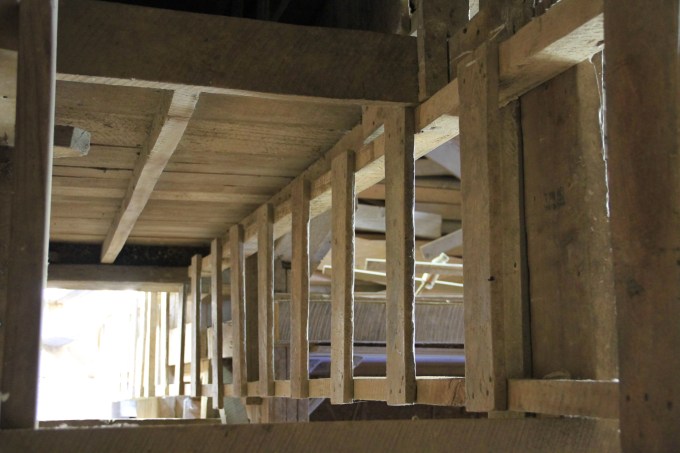
6-shultz-5-9600-copy


A rope was pulled to lift the spout then the pole was turned until the pointer lined up with the desired bin number.


Wooden Pegs

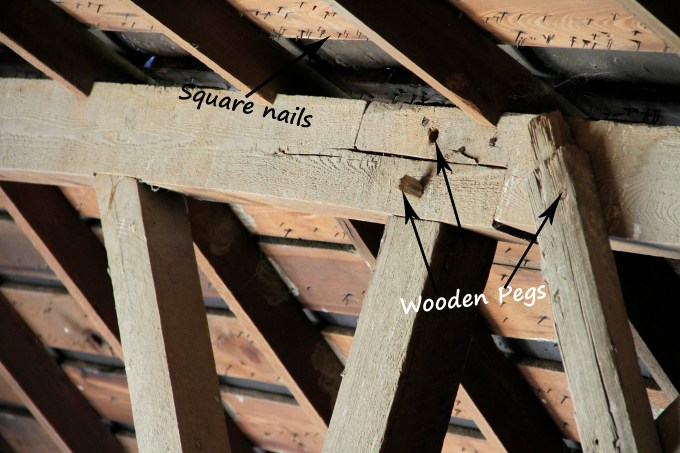
The barn was originally constructed, I think in 1895, with wooden pegs and square nails.9-20120914_9616

The bins were built with ‘modern’ round nails. Since the bin boards were native oak, and like the Pig Palace slats, each board had to be pre-drilled in order to drive the nails without bending them.

The ladder to the top of the elevator was straight up. 10-20120914_9610

The rungs were about eighteen inches apart which was easy enough to navigate, unless one was

carrying a scoop shovel, 11-scoop-shoveltools or anything else to make repairs. Given the age of the barn it is incredible that it could contain so much volume. I estimate the barn could hold 15,000 bushels of grain at about 60 pounds per bushel or about 900,000 pounds!
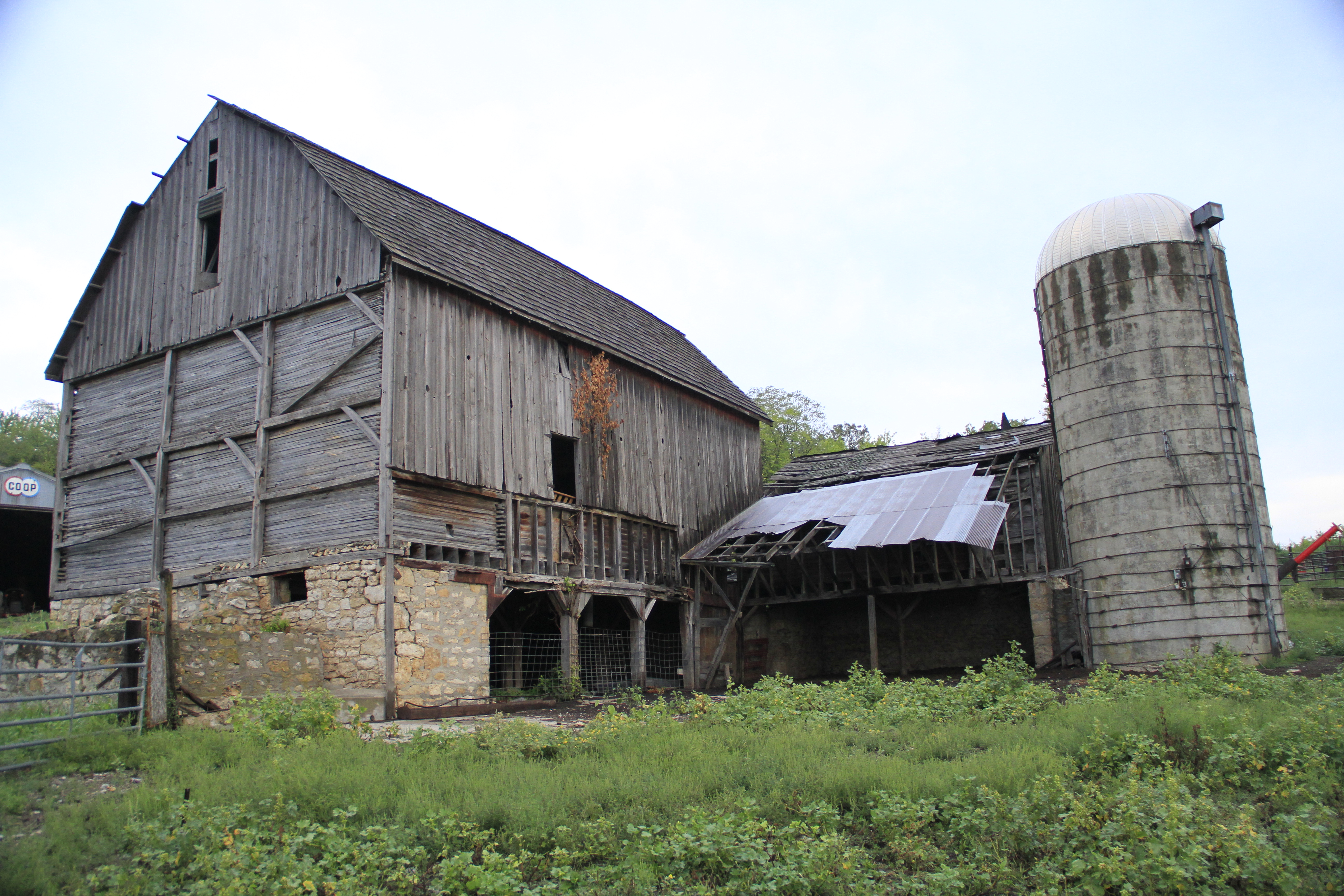
Proud farm trashed

The farm was the livelihood for two generations of Shultzes’. Farmers didn’t just go get a new gadget if one broke; they repaired it. They built what they needed. They took care of everything they had because they used everything they had just to live. They took pride in what they did, how they did it, and how they cared for their equipment, buildings and critters. My Dad and Grandpa are probably turning over like mad in their graves with the abhorrent way the Hecks are tending the barns and property they claimed they would care for in the manner in which it had been for over one hundred years. Not only are the barns falling apart

 13-shultz-2-9423

12-20120914_9439

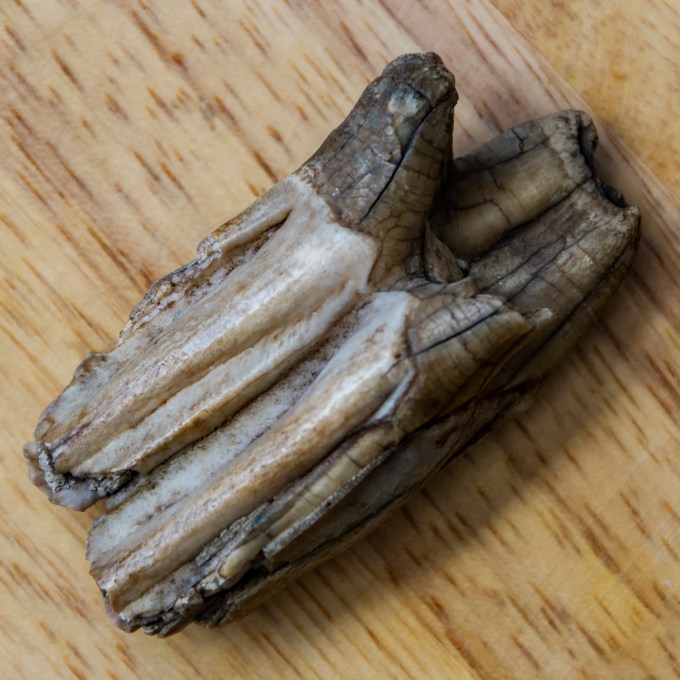
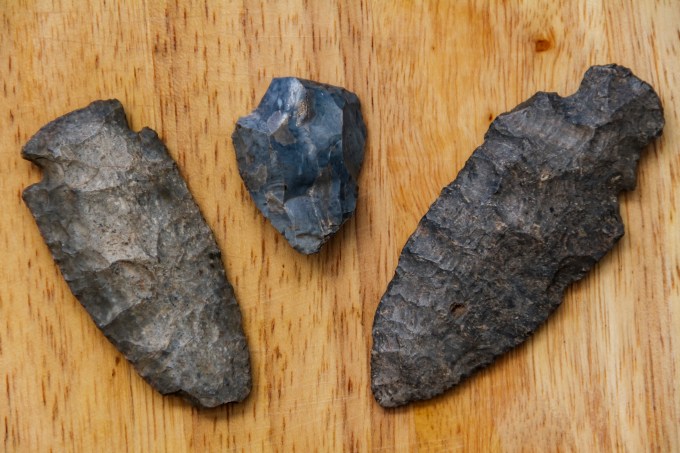
they have lined all of their junk, broken equipment, trash, and crap along the road from the barn to the crick (where I found the water moccasin and where Grandpa found arrowheads, fossils, trilobites and unknown critter teeth). This was done by a man who claims to be an environmentalist and naturalist. When I took these photos I was physically sick and emotionally outraged. Good thing I did not see mr (and I use the term loosely!) heck. In his defense, he does not use the barns for anything but storing junk so I guess it is understandable that he would not maintain them. Still. Got that off my chest!

Arrowheads

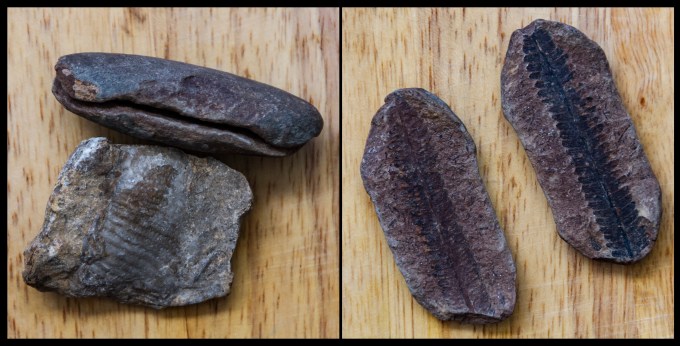
Grandpa found several arrowheads and other goodies along the crick.15-20160918_9625     16-20160918_9629

A tooth probably from a wooly mammoth,20-20160918_9628

some fossils,21-20160918_9630

and a Trilobite and fern leaf.19-20160918_9626

Plowing the big field

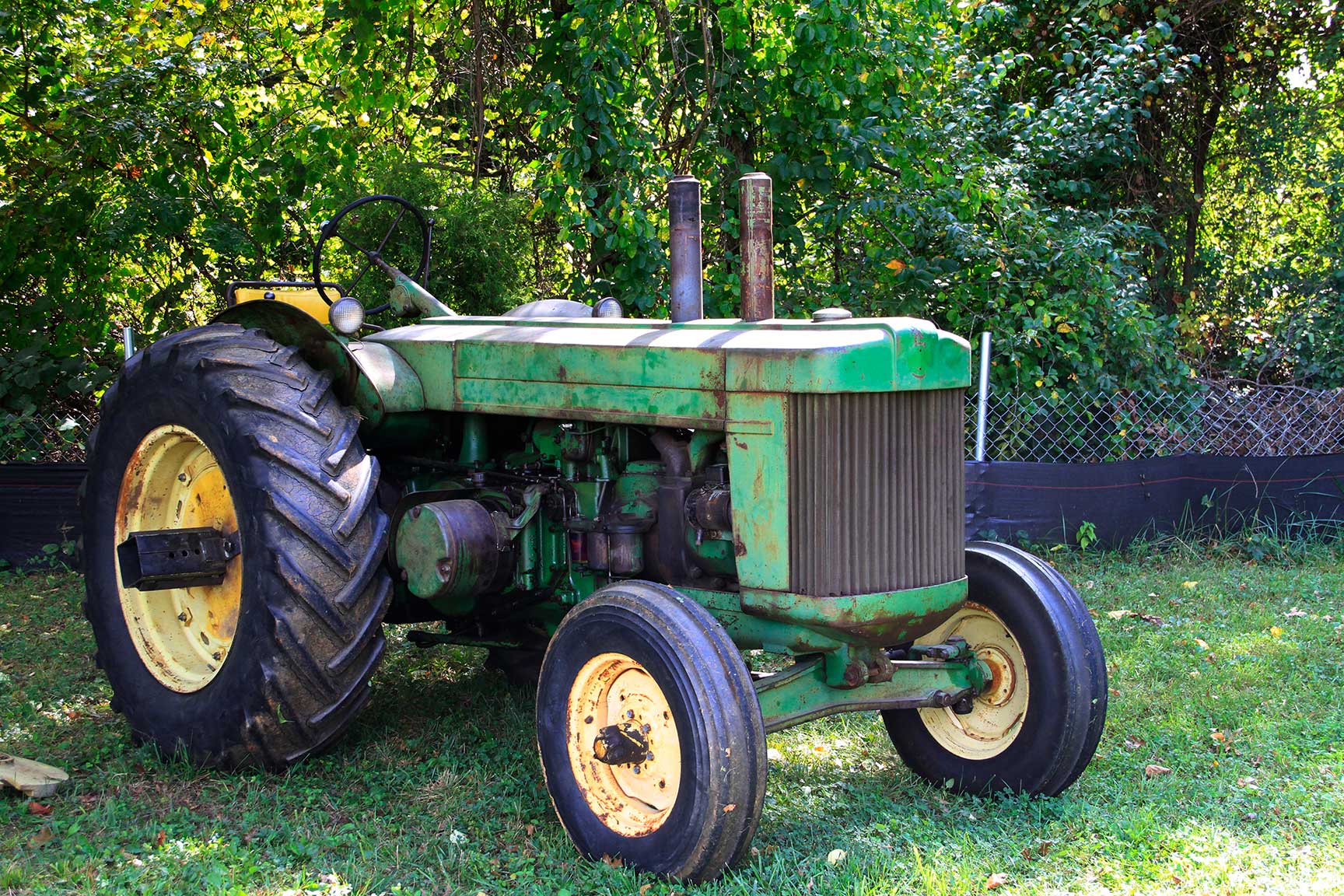
One of our tractors was a John Deere model R24-john-deere-r-20120901_9405

It was a monster tractor, at least to a 6 year old. More on this beast in a later installment. Anyway, Grandpa was plowing the big field, aptly named since it was the biggest field we owned at 50 acres. It is the one across the crick where I found the water moccasin. After harvesting wheat, we had to plow the fields to prepare them for planting the next round of crops. One of the difficulties of plowing was when the wheat straw, which was sometimes baled for bedding for the cows and horses, was very heavy or contained lots of dead weeds. (BTW, hay and straw are two different things. “Hay is for horses”, meaning that hay is for food and straw is for bedding.) That was the situation on this day. Grandpa was plowing along when the plow began to plug up. Instead of stopping and clearing out the trash, and because he was using the R which had a wide front end so one front wheel was always in the furrow, which is usually six to eight inches deep, and the tractor would essentially drive itself, he climbed off the tractor onto the plow and was pushing the trash thru the plow with his foot. Two things happened; first his foot got caught, second, the R jumped the furrow and was heading for the crick and a ten to twelve foot drop. Grandpa pulled his pocket knife, which was honed like a razor, out of his overall pockets and he simply cut his boot off so he could get his foot out and get back on the tractor to avoid the crick. After that, there was no getting off of a moving tractor!

A little does a little good

I’m not sure of the particulars but Grandpa was involved in a fertilizer test on wheat. One field was planted with a small amount of fertilizer, and possibly none, and the other was planted with more than the recommended application.27-grandpa057

The results are obvious from the photo and the take away is, “A little does a little good and a lot does a lot of good.” Used that a lot. Not sure if it did a lot of good tho.


Grandpa’s Den

Grandpa’s den was a magical place! It was wood paneled with a closet full of guns in one corner, a big rocking chair, a couple of other chairs and his roll top desk. There was a table/chair/high chair combo thing. With the chair folded down it was a seat and attached table for eating or drawing. With the chair folded up on the table it became a high chair. And the blocks.  20170208_2064Whenever I would build some fantastical construction it would be left just as it was till the next time I was there. The wooden box used to be completely full. It was difficult to get all of the blocks to fit back in the box with none going past the top edge. Many have been lost over time, or chewed on by dogs.
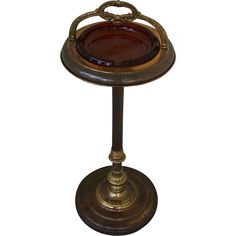
Grandpa smoked cigars and there was an ash tray standby his roll-top.To this day when I smell cigar smoke it takes me back to grandpa’s den.

28-cigar-ashtray-stand

Uncle Well, Grandpa’s brother, traveled the world (I have no idea what he did) — from the Orient to the jungles of South America where he got this sword. It is a Legitimus No. 216!

28a-legitimus-1

The sword was used on banana plantations to cut the stalks of bananas from the trees. It is said to have been used in the wars which were common between the plantations, and to have killed several men. I did some research since I am not sure if it is a sword or a machete, but the difference is in the intention. This is what I found: The blade is intended for use as a machete first (banana harvesting), sword second (plantation wars), so it would serve either purpose. The markings would suggest that it was intended for a Latin American market.

My research corroborates Grandpa’s story, albeit maybe not the killing part, so whether that was true or not, we will never know.

But Grandpa would never lie to me.

He also had a collection of wooden puzzles which were also sent to him by Uncle Well.

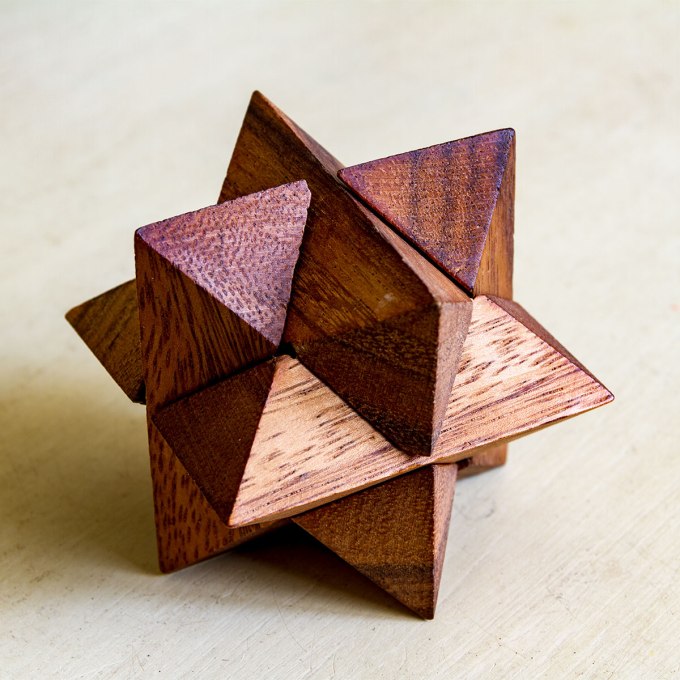
Grandpa’s Puzzles

Notice there are three puzzles in pieces…28b-puzzles

The puzzles were kept in his den in an antique barrister book case.1042106a

There are thirty-three puzzles. I would get one out at a time, as per Grandpa’s stern instructions, take it apart then put it back.

A little side note here on “stern instructions.” When an adult, strangers excepted – unless it was an emergency, told you to do something, you DID IT. Police officers? Like adult relatives, the proper response was “Yes Sir/Yes Ma’am!” There was the unspoken threat of getting a whoopin’ with the belt (never happened) but of utmost importance was trust and respect. They trusted us to do the right thing and we respected them and did not want to disappoint them. Unfortunately there were some times when I could see the hurt in Dad’s eyes and I knew that I had sorely disappointed him. That hurt more than a belt ever could.

back to the puzzles…On many occasions I was not able to reassemble the chosen puzzle and would leave the pieces in a pile on Grandpa’s roll-top. The next time I was there the previously disassembled pile of puzzle pieces was correctly re-assembled and it was sitting on top of the roll-top. There are no instructions for the reassembly of these puzzles.


Grandpa’s Puzzles become Guy’s Puzzles

I became the re-assembler of piles of puzzle pieces when we lived on Donee Diego Dr. I had the puzzles on shelves in my office, which was a room converted in the garage. Unlike Grandpa, several of them were off limits to my kids, for two reasons: no reassembly instructions, and no one is as smart as Grandpa was. Nevertheless, I would frequently find one in pieces on the floor. I would dutifully put it back together and put it on the top of my roll-top desk (not Grandpa’s desk). That always sent me back to Grandpa’s den. Somehow I now have three puzzles that are in pieces. Two should be relatively easy to reassemble, the other, however, is gonna be trouble. I have no recollection of what it even looks like!

Puzzle Pieces Reassembled!

These are the three puzzles that were in pieces.28c-large-puzzle-reassembled  28d-small-puzzle-reassembled

I have to admit, after some cogitating, and some googling, I remembered what it looked like and was able to find a basic drawing of two steps of assembly. It is a Miyake Puzzle.

From this   28e-puzzle-pieces

to this28f-miyake-puzzle-reassembled

These are puzzles that were added to my collection by my kids.guys-puzzles

Not only could Grandpa turn a hay barn into a granary and re-assemble piles of puzzle pieces, he was very smart – keep reading…

County Commissioner

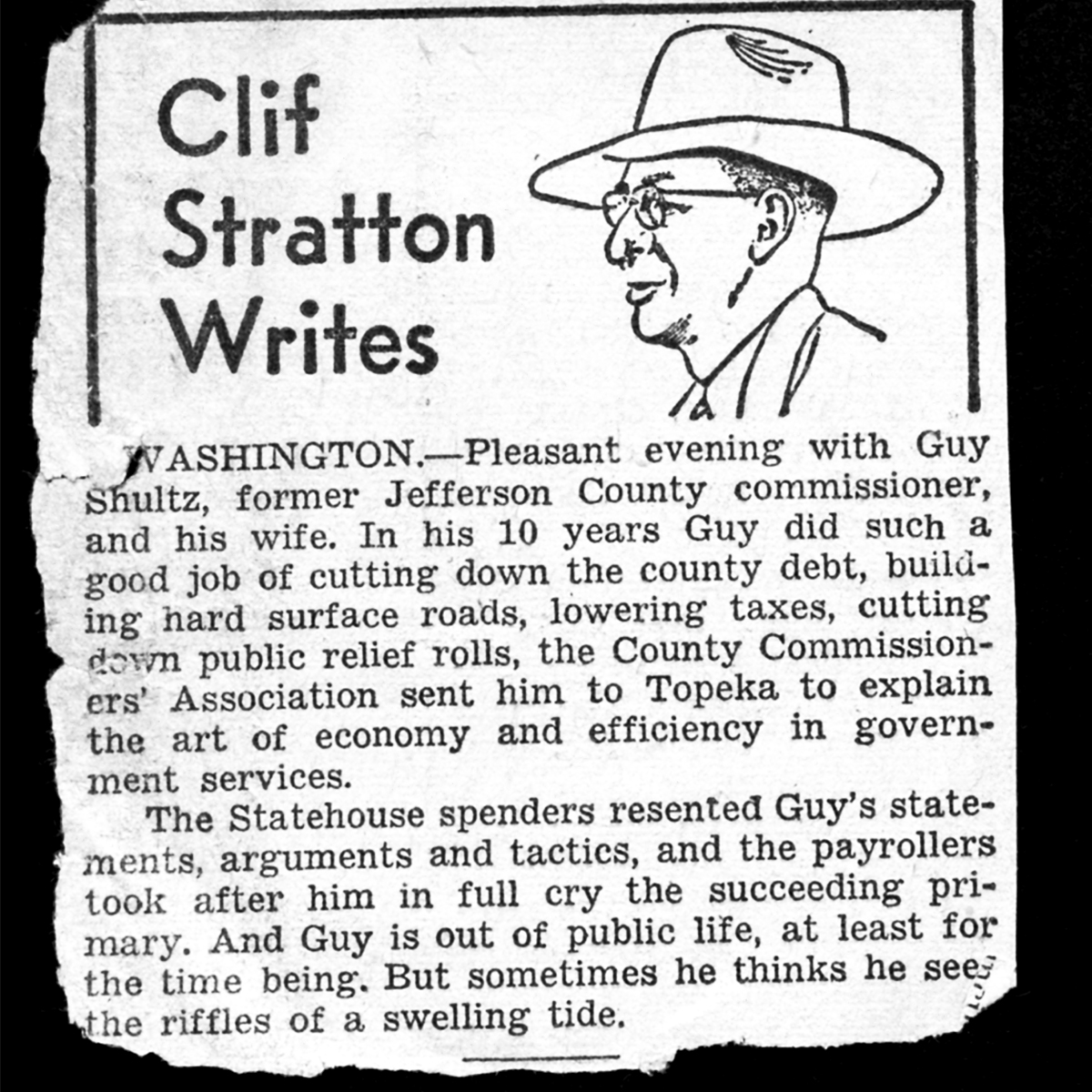
Grandpa was the County Commissioner for Jefferson County for ten years. Here is an article about his efforts. 29-county-commissioner059

Canning corn

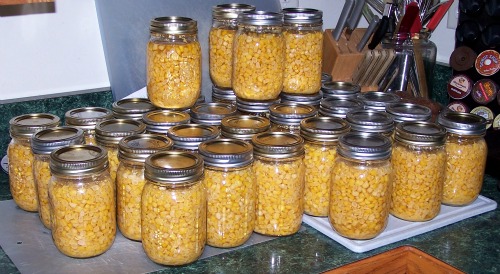
fresh-canned-corn-home-canningWhen the sweet corn was ready to pick everyone was involved including Mom, Grandma, Aunt Caroline and Michele Ann, who would all come to help with the canning. We planted sweet corn for canning and corn on the cob with a four row corn planter just like we did for the corn we sold. Canning corn was serious business! When the tassels began to turn dark we would walk thru the acre or so we planted for canning/eating testing the kernels with a thumbnail, being careful to replace the husks after testing. You could tell if the corn was too young because the kernels would not be full. If they were just right when you jabbed a kernel with your finger nail, white juice would squirt out. If too old, no squirt. We usually loaded 10-20 gunny sacks with corn.
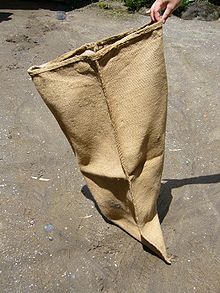
220px-hemp-sackasabukurojapan

A gunny sack is about the size of a thirty gallon trash bag. Then we had to husk and clean the silks off. The ladies took over at that point and cooked the corn for canning. I would try to weasel in when the corn was done to ‘help’ cut the corn off of the cob. I probably ate as much as I put in the canning tub. Canning is more than I want to describe here. Read a cookbook or google it if you want. Once the mason jars were sealed and cooled they were distributed between those helping and the ones kept would go on the canning storage shelves. Inside the basement door Grandpa had built shelves just tall enough for the jars. There were probably sixteen shelves by four feet long.

Our shelves did not look like this. We canned corn. Well, probably some “rabbit food” (any green vegetable) too but nothing like this;

canning

Next time: Around Lawrence.

Buffalo Wallows

Installment Four

Buffalo wallows

Going up the road past the windmill at Grandpa’s place to the pastures on top of the hill were two buffalo wallows.slide002  These are depressions in the ground where water accumulated. They are typically found on the prairies but these two were on a plateau half way up the hill in an area that was near a natural year-round spring. The buffaloes wallowing abraded hair, oils and cellular debris that kept the wallows from draining, which prolonged the available water. It also ‘killed’ the area so plants would not grow or were severely stunted if they did grow. The two on the hill rarely had anything growing in them.


The water moccasin

aka cottonmouth or Agkistrodon piscivorus is the only poisonous water snake in Kansas and the world’s only semi-aquatic viper. They will stand their ground when threatened and open their mouth to display their fangs and the white lining of their mouth. I found one below the barn at Grandpa’s where the road dipped to cross the creek to go to the big field. Instead of a bridge to cross the crick, the bank was cut down on both sides, the crick was probably eight to ten feet deep, and there were two eighteen inch tubes about ten feet long for the water to flow thru. The road was built over them. There were always piles of sticks that had washed down from trees overhanging the crick, collecting around the tubes. I was eight or ten and was looking for arrowheads and crawdads one day and here was this cottonmouth hissing at me with his mouth agape atop one of these piles of sticks.

maxresdefault

I knew instantly what it was, just like one knows a rattle snake rattle the first time it is heard. I ran back to the barn to get Dad or Grandpa and a gun. It was probably four or five hundred yards, or maybe a mile – it was a looong way, to the barn and I was setting a world record! Dad and I jumped in the truck and sped to the crossing but the snake was nowhere to be found. We carefully poked around a bit but couldn’t find it. I was always leery of snakes after that!

Snapping turtles

snapping-turtle

Nasty creatures!

They could ruin a pond dam by burrowing into it. We always had at least one and usually two rifles in the truck for varmints like cottonmouths, rattlers, copperheads, coyotes, and snapping turtles. The driveway to Grandpa’s place was east of the Wellman Road, which was east of Mud Crick. There was a pond here that always seemed to attract snapping turtles from Mud Crick. We were constantly pulling over to shoot them. No swimming in this pond! This pond will be part of another story.

Frog gigging

bullfrogs096.jpgThe bull frogs would be croaking to attract mates and that was the time to get ready to go giggin’. It could be done on foot but was more difficult, you always got muddy, and snakes are difficult to see in the dark. Frog giggin’ was always done in the dark on a pond, crick or slough (pronounced ‘slew’) in a boat. You would paddle slowly and quietly around listening for the deepest sounding croaker. A flashlight was used to locate and ‘freeze’ the frogs in the shallows on the banks. Shine the light in their eyes and they would hold stone still. The trick was to get within eight feet or so to be able to reach them with the gig.
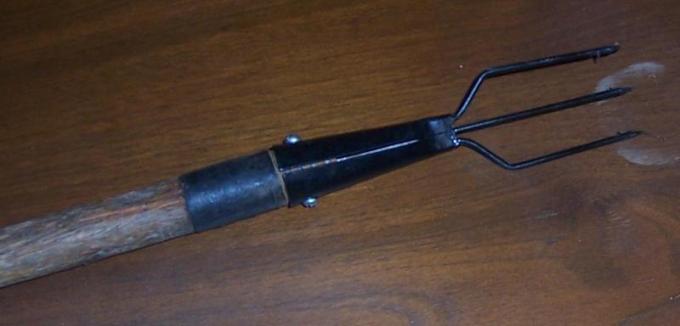
frog-gig-on-stick

We would come home with hundreds of frogs. Well maybe not hundreds but at least forty to fifty – takes lots of frog legs to make a meal. Those not already dead had to be dispatched, skinned, cleaned and the legs detached. Before frying them you had to remove a nerve to keep the legs from jumping out of the frying pan. Frog legs are delicious!

Columbine Lodge

My cousin Ren was a year younger than me and we were partners in crime. Ren and his dad, Uncle Bill, who was actually a great uncle and was built like a bull, frequently accompanied us frog giggin’. Ren and I had lots of sleepovers and one night we stayed up late to watch wrestling on TV. Our favorite wrestler was Dick The Bruiser.  200px-william_afflisHe was this huge guy that was a great wrestler. Uncle Bill and Aunt Martha came home, a bit tipsy, from a party while we were watching wrestling. Uncle Bill tells us to get him in any wrestling hold we wanted; we were maybe ten, After huddling to plan our hold, we had him lay down on his back with his arms straight out from his sides, palms up. With his size we figured this would be his most vulnerable position. Then we each sat on a hand. He asked if we were ready and without waiting for a response lifted us up, arms straight, and slammed us together over his chest.
One summer they asked me to go with them to their cabin in Green Mountain Falls, Colorado, for a month. Ren and I shared the only room in the ‘basement.’ It had one large sliding glass window. We were sneaking out one night and I was opening the window. My hand slipped and my elbow went thru the window. It bled like a stuck pig! We put a couple of band aids on it and called it good. I still have the scar.  The cabin was not far from the Columbine Lodge and of course Uncle Bill knew the owners. columbine-lodge

They were remodeling the lodge that summer so there were no guests. Ren and I would go over and help out for two to three hours a day then go off exploring. There was a crick flowing thru the town so we decided to follow it to see where it went. It was about two feet across and maybe a foot deep, crystal clear, cold, and delicious. The grass-covered banks snaked back and forth thru a lush green valley with aspen, pines and mountains all around. We found a beaver dam, a second, and a third and kept going. It started going uphill and we continued, finally coming to a gravel road. Great view! What else would one do but keep going up! Along comes a truck. It stops. This ranger gets out and sternly asks who we are and what are we doing on this road. We explain about the crick, beaver dams, valleys and then finding this road. Turns out we were on the road to Pikes Peak. He was not happy but did give us a ride back down to Green Mountain Falls.

Ren had two older sisters, Martha Jo and Jeanie. Jeanie, the younger daughter, married a local rancher, Curtis Stewart, who was about twelve years older. Uncle Bill was furious! Curtis had this huge tree on the side of a hill that he hung a rope from. The rope was probably fifty feet long with a wooden contraption you sat in. You held onto a rope that he used to pull you up the opposite hill on his horse, then you let go and swung in this HUGE arc from hill to hill.

We had a Shultz Christmas party every year two weeks before Christmas. The kids made a haul while the adults drew names to exchange gifts. At these, or any family gatherings, Uncle Bill would not be in the same room with Curtis. He would eat at the kids table and after dinner would be in the kitchen with the women. Jeannie should have listened to her Dad! She went missing and Curtis claimed she ran away. She was later found at the bottom of a well that Curtis had bulldozed closed. He was convicted and died about fifty years later in prison. Uncle Bill and Aunt Martha did not live to see justice. They were in a plane crash in Germany. Aunt Martha died in the crash and Uncle Bill a short time later from infected burns.

Stanley Sheppard

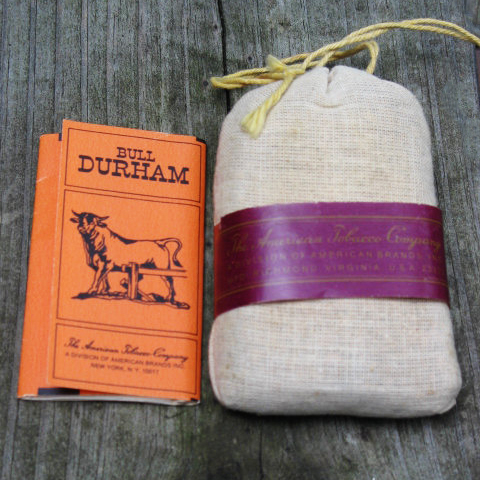
Was an amazing man! He was Black, or at that time, Negro. He had polio as a child and his right leg was shorter and had little muscle. I could out run him but had hell to pay when he would catch me unawares later. I admired Stanley Sheppard. He was funny, strong as an ox, gentle and kind. And he rolled his own cigarettes, one handed! He would pull his papers out of his shirt pocket, remove one and replace them in the pocket. Then out came the little bag of Bull Durham tobacco with the red string tie. il_570xn-345423661

Open the bag, pour some tobacco out in the paper, pull the red strings with fingers and mouth to close the bag, and while putting the bag in his pocket with one hand was rolling the cigarette with the other. He always carried wooden stick matches that he struck with his thumb. He would hold it in his fingers with just the head of the match sticking up, then flick the head with his thumb nail, like you were shooting a marble, and not burn his fingers! The whole process from paper to fire was a smooth, fluid motion and pure magic.

Stanley was a part time hired hand that Dad called when hay needed to be bailed or crops harvested. I wish I knew the story about how they became friends. This was in the late Fifties and early Sixties when racial tensions were bad. We had been bailing hay and stopped for lunch, which in itself was unusual because we rarely stopped when bailing hay. The saying, ‘make hay while the sun shines’ was so true. Too early in the day and the alfalfa was too wet. Too late and the dew would make it too wet. Wet hay, packed tightly in a barn, would heat up and spontaneously combust, burning down barns and making winter cattle feeding costly. Anyway, Stanley, his Uncle, our full-time hired hand, Chuck, Dad and I went to the red house which was just across Mud Crick from where we were working. As we washed up at the hose and headed into the house to eat, Stanley’s Uncle, whose name I cannot remember, stopped and said he would eat outside on the steps. My Dad stopped, caught him by the arm and said, “Like hell you will! You’re coming in to eat at the table with the rest of us!” That made a HUGE impression on me but I think Stanley’s Uncle was dumbfounded. He seemed, at first, to be offended, as if to say get your hands off of me, then when Dad slapped an arm around his shoulders to guide him inside it was like a huge weight had been lifted from his shoulder. I’ll never forget the look on his face. Some say Dad was a redneck, and maybe he was, but he was friends with the Sheppard’s and many other blacks.

Power Wagon

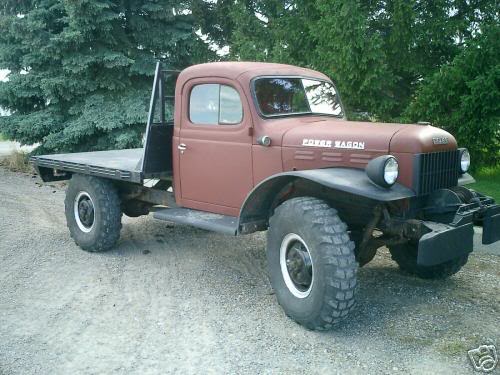
dodge-power-wagon

Dad got a Dodge Power Wagon to use to feed the cattle in the wintertime. It had more clearance and shorter wheelbase than the International pickup we had. Early one spring morning, as things were beginning to thaw out, we were headed up the road past the windmill to feed the cattle on the top pasture. Feeding the cattle was done by standing in the back of the truck, on a pile of hay (alfalfa) bales, in the freezing wind, while Dad drives in a toasty warm cab. You cut the strings on the bale then dropped flakes of hay every ten feet or so. Dad would roll the window down and yell, “Boooooss. Here Booooss (drag out boss).” And the cows would come running. Literally. It was a sight to behold, while freezing your butt off. One time Dad hawked a lunger out the window, it hit the fence and froze before it could drip off. Cold. This particular morning we did not make it to the top pasture. We had gotten past one buffalo wallow and the bottom fell out of the road. The ground had thawed more here than the rest of the road. The Power Wagon was high centered. Meaning it was past axel deep and resting on the frame. The wheels just spun uselessly. So guess who gets to slog back to the barn to get a tractor? Yea, me. I got the 730 John Deere which was the biggest we had at the time. That was an exercise in futility. So I went back, on the 730, to get Chuck and the 620 John Deere, which was “my” tractor. Another exercise in futility. We finally got a neighbor to bring his bulldozer over and with both tractors and the dozer we were able to drag the Power Wagon to solid ground.

images-1

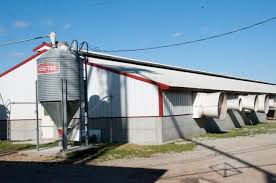
Dad decided to start raising hogs, so he built a pig barn similar to this – but ours did not have the exhaust fans:

Phew did it stink!


He converted the Power Wagon from a dump bed to a feed bed with auger, like this:

bulktruck_g300-381x240

Dad knew everyone in Douglas and Jefferson counties. One of the guys he knew was a welder who was happy to swap his labor to remove the dump bed and install the feed bed for the dump bed. This was integral to the success of the Pig Palace (Dad’s name for the pig barn).

After completing the PP we started going to farm sales and auctions to buy piglets. We bought a LOT of piglets! A trip to a sale would net us anywhere from 10 to 100 pigs. Then we would sort them by size in the PP pens. The piglets weighed about ten pounds and we shipped them at about two hundred pounds. At its peak we were shipping a semi load of hogs, fifty or more, to market about every three to four weeks.

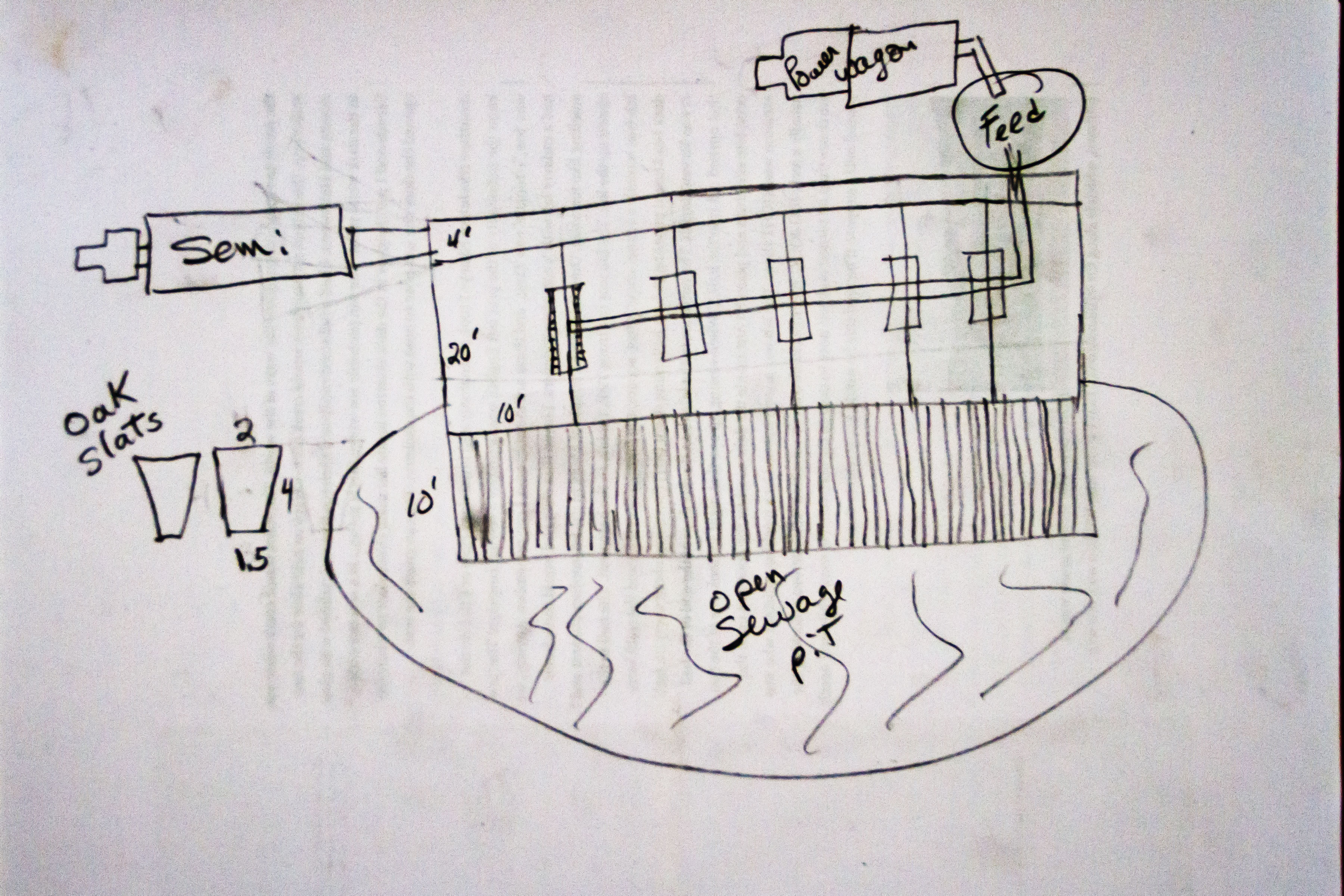
This is a drawing of the PP. 20160821_9020.jpgThere were ten pens each ten feet wide by twenty feet long. There was an additional ten feet of slats over the lagoon which was an open sewage pit. The wavy lines depict the smell wafting up from the pig shit. The slats were rough cut oak which means that they were a full 2” wide by 4” high with square edges and rough on all four sides. Lumber yard 2×4’s are 1.5” x 3.5” with smooth sides and rounded edges. These native Oak boards were splinter factories, and HARD. We had to drill holes completely thru the boards to be able to drive the nails. The slats were cut with a bevel on each side and installed with the narrow side down and about ½” apart to facilitate the dropping of the droppings to the lagoon. In order to get the droppings to the slats – stoopid pigs crapped everywhere, not just on the slats – we had to scrape the crap from the cement to the slats. bully-tools-barn-web192136-lrgFarming is all fun and games! So every day, scrape and hose pig shit and make sure every feeder was full and every feeder and waterer was not clogged up, remove any dead hogs and try not to get crap on your pants, download

and this was before going to work. Pigs are omnivores and will eat their dead. Gross. Fortunately, not that many died. The smell was actually not that bad after the lagoon started ‘working’, ie; breaking down the crap and this chemical reaction helped to stem the smell – mostly. The feeders were on an auger system that was connected to a feed bin outside that was filled by the Power Wagon feed bed. So the feeding was mostly automated and only needed to be filled about twice a week.

International in the snow

With the conversion of the Power Wagon from carrying hay bales to sporting a fancy feed/auger bed we were back to using the International for feeding the cows.

international

We had about a hundred head of cows and Dad claimed that he counted them every day by counting their legs and dividing by four. That was before I knew what Dad jokes were. He did know which calf belonged to which cow though. One day Dad and Chuck were feeding the cows, don’t know how I got out of it that morning, and after Chuck got all the hay off the truck they started out across the hilltop pasture in the routine of looking for strays and anything else that may be amiss. I SO wish I had been there this day! They were slowly going across the pasture when Chuck, in the bed holding onto the rain gutter of the cab, spotted a coyote. He told Dad, who stopped to pass one of the rifles to Chuck then took off hell bent for leather, which translated means going very fast without regard for safety, after the coyote. Chuck was leaning across the top of the cab, bouncing and pounding his elbows on the cab, when Dad hit a tree stump that was covered by snow and was consequently invisible. The truck comes to an abrupt stop, Chuck goes flying over the cab and lands in the snow about ten feet in front of the truck. Dad wisely did not start laughing until Chuck got up laughing. It took them a while to find the rifle because it plowed under the snow from the spot where it hit the snow. Coyote escapes. Probably laughing his ass off at the sight. The International was a great truck but on that day a flaw was discovered. The tie rod that connects both front wheels, so they turn equally, was installed in front of the axel. When they hit the stump the tie rod bent and turned both wheels in which made the truck un-driveable. Dad and Chuck had to slog about ¾ of a mile back to the barn, thru knee deep snow, to get a tractor. Sometimes farming is fun and games! How I wish I had seen that!

Tool box

imagesWe built a wooden tool box for the bed of the International. It was the width of the bed and about two feet deep. There was a shelf running the width of the tool box that was divided into compartments to hold small tools, sockets, nuts and bolts, and other small stuff. The bottom held the 36” pipe wrenches, 36” long by 1”drive socket breaker bar, chains, shovel, ‘small’ portable tool box that probably weighed fifty pounds, and other assorted large tools. The top was slanted and covered in corrugated tin and hinged at the back. We had everything needed to complete most any repair or break down in the fields short of a total engine overhaul which was done in a clean barn. Right, clean barn. Dad would tell me to get a ½” box end wrench or socket or something. I would raise the lid then put my legs inside the tool box while sitting on the edge and begin to rummage around looking for the desired tool. Finally, in exasperation, Dad would come over, reach in, and snag the tool he needed. I finally got to where I could do that too.


One inch drive sockets are BIG. We would use the 36” breaker bar download

with a 3” socket and a six foot pipe extension to change the distance between the rear tractor wheels for different crops. The procedure was to put the socket/breaker bar on the tractor lug nut then slide the six foot pipe over the breaker bar, grab the wheel for balance and stand on the breaker bar/pipe. Then to get it to loosen, bend at the knees and essentially bounce on the pipe. The bounce had to be straight up and down least the pipe/breaker bar shoot out from under you and land you on your arse.

Cardboard bales

30x48x60-900lbs

Erosion was always a problem on the farm and with the crick dividing the big and little fields it was essential that any side erosions were contained. We would typically use any waste we had, from house waste to barn trash to old parts to trash trees and anything we did not use. Knowing everyone like he did, Dad contacted someone he knew at the Lawrence Daily Journal World newspaper to inquire about any waste they may want to get rid of. Turns out they baled old cardboard and paper that was waxed, and thus could not be reused, and were more than happy to dispose of them without having to pay to do so. The bales were            38 x 40 x 60 and weighed about nine hundred pounds. As I recall we could get six of them on the old Chevy truck we used to haul grain. Although it had a dump bed we had to be careful not to raise the bed too high and risk dumping all six of the bales in a wash. Another concern was backing so close to the edge of a ravine and hoping it did not collapse. So we would raise the bed a bit then climb on to push the bales off. The trick was not to go along with the bale into the wash.

Next we’ll spend some time at Grandpa and Grandma’s house.

Rotary Phone

Rotary Dial Phone

shopping

This was the NEW phone! Unlike the first Model A Fords that “came in any color you wanted, as long as it was black,” this phone came in one color – black. Our number was VI3-5516. It was a party line with five or six houses on the same line. Each house had its own number, but if someone on the line was talking you could pick up and listen in. The parties talking would hear a click when another phone on the line picked up so it was difficult to listen too long before they said something. We never did that though. [Grins]

1st phone

The phone preceding that was used thru an Operator. You would pick up the handset, click the buttons a time or two, an operator would come on and say, “Operator.” You would then give her the number you wanted to call and she would make the connection.


My Aunt Ethel Delk was a telephone operator.

operator

She and Uncle Ferd lived in Valley Falls, which was up the road a piece (about 30 minutes), or “up yonder.” Aunt Ethel had a huge salt and pepper shaker collection. Uncle Ferd removed a double door between the living room and dining room, framed it in, and added shelves so you could see her salt and pepper shakers from both sides. It was awesome.

S&W-.35Uncle Ferd, was a horse trader. He later became a used car dealer. Movin’ on up. I have the Smith & Wesson CTG .35 (.35 is read as 35 caliber) semi-automatic pistol he carried when he was trading horses. Interestingly, it cost $16.50 in 1913 and is currently worth about $450, which is about what it’s 1913 cost would be if corrected for inflation. Anyway, one day Dad and I were admiring it and decided we had to shoot it so we took it apart to clean and inspect for safety. We had it completely disassembled on the table when Mom walked by and made a snide remark about not being able to put it all back together without extra pieces. We did. No extra pieces. Then we went out to shoot it. Being a .35, finding ammo was impossible so we had to use the original shells that were with it. We set up a can about fifty feet out in the field, took careful aim and squeeeezed the trigger. There was a pitiful pop and the bullet literally fell out of the barrel and went about five feet. Guess the bullets were shot. [Grins]
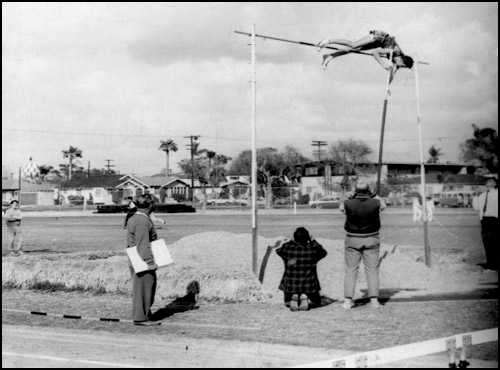
Trading and Marbles

I was a master at trading stuff. I would take an old pocket knife to school and come home with marbles, rocks (cool rocks of course), comics, two pocket knives, or other junk. Mom and Dad easily found my collections of loot and told me to return it. When I explained that most of the stuff was the result of three or more trades between half a dozen kids they relented. They did make me stop though, or so they thought. Guess a career in sales was in my blood.

marbles

If I didn’t win marbles by trading I certainly did shooting them!  I had two steelies, one large and one small, which were just ball bearings, but I was a killer with them. Of course I wasn’t the only farm boy with access to ball bearings, but I was definitely the champ when it came to shootin’ marbles.

Before the farm sale, after Dad died, we found a bunch of marbles in the attic which were probably Uncle Herb’s. They were likely the most valuable thing being sold that day. The antique store owners came to the early walk-thru to evaluate the stuff they wanted and when the auction started three or four of them actually got into shoving matches and spilled several of the jars of marbles all over the floor. I ended up with a bunch of marbles that Tracey put on eBay, but I don’t think they were from the sale. One was a “Lutz.” Within a few minutes of listing it she got an offer to buy it immediately for $50. She refused. It ended up selling, after heated bidding, for $1,200!

Pole Vaulting

pole-vault-saw-dst

Being skinny and lanky I was not an athlete, although I did catch a line drive when pitching softball one time. Really pissed Stanley Hubbard off! Best day ever, but I digress. I did have a knack for pole vaulting. We had a pole vault pit at school that was filled with sawdust. The pole was aluminum; I think. After pleading my case to Dad; for a pit at home to practice at, he relented, but I had to dig the pit. I have forgotten where we got all of the sawdust. We built a box for setting the vault pole in out of 2×4’s. The stands were 2×2’s with 2×4 bases. We nailed 6 penny finish nails (two inches long) every inch for the cross-bar to rest on. The cross-bar and the pole were bamboo and the pole was wrapped with black tape between the bamboo ‘knuckles’ for grip. Obviously it did not bend. None of the poles from that era bent like they do today. I think my ‘record’ was 7’6”. Not bad for someone knee-high to a grasshopper.

First TV

531a74f5e79a3961bd882f30420cc45d

The first TV we had was a Motorola with a round screen with the top and bottom flat. I think we got it in 1952.  It got all three stations, in black and white of course. We got a color TV a couple of years later. It probably had a whopping 18” screen. It had a remote that turned it on/off, changed channels/volume, etc…me.

Some of the shows we watched were; GunsmokeThe Lone RangerThe Mickey Mouse ClubBonanzaHowdy DoodyRed SkeltonHave Gun Will Travel (the source of the quote on my business cards) – Loony ToonsAmerican BandstandEd Sullivan The Cisco Kid (Oh Pancho, Oh Seeesco) – Disneyland – and, of course, Lassie, which was the fourth longest-running U.S. primetime television series after The SimpsonsGunsmoke, and Law & Order. It was broadcast in black and white until 1965. (I always wanted a Lassie dog. I mean who wouldn’t? She would bark two or three times and Gramps would say something like, “Timmy’s fallen in the old well by the stand of Oak trees down by the south forty” – smart dog!). Then there was The Phantom. That show scared the BEEJESUS out of me! It was a mystery show and at the end of the show the screen would be black and this white phantom face would float around. I would hide behind the couch and peek over with just my eyes above the back of the couch. I have totally repressed what it said. Beejesus!

Ringling Brothers and Barnum & Bailey Circus

circus poster

Mom took MA and me out of school so we could watch the elephants set up the Big Top tent. I must have been 6 because Jennie wasn’t around yet which would make it 1952 or maybe 1951 because I don’t remember Mom being pregnant. I do, however, remember that we had a 1949 Plymouth at the time. Priorities you know. The circus was going to be in Lawrence where the fairgrounds are now. It was mind-blowing for me, but I don’t remember ever wanting to run away and join the circus. Ringling Brothers and Barnum & Bailey quit using elephants to set up the Big Top in 1956.

circus

Chocolate Bars!

 Mom always had these HUGE chocolate bars in the cupboard. They were probably 4” x 10” at least.chocolate bars

Climbing the Windmill

farm windmill

The windmill was at Grandpa’s place. It was not a huge windmill as windmills go, but when one is five, huge is relative. It was huge. In reality it was probably thirty feet to the platform. Huge. The first horizontal rail was six feet off the ground. That’s where the ladder started. I had to climb up the cross braces (wires) to reach the first horizontal rail then work my way over to the ladder (remember, I was five). Then up! Man, you could see forever from the top! Of course I had been told not to climb the windmill and to stay away from the well when no one was around. Of course. It was sooo cool I had to tell Grandma, and she ratted on me! I didn’t get a lickin’ but did get a good scolding.

The well was eighty feet deep by four feet in diameter. It was lined with rocks so the actual inside diameter was about three feet. It was hand dug – eighty feet by hand. The water was clear, cold, and gooood.


Doc1-1


This is the actual hand pump. (The story about the cattle chute in the background will come later.) The pump had to be primed so we kept a quart jar of water sitting by the pump. You poured the water in the top of the pump then pumped like crazy till the water came.


One of my chores, I was probably six, was to carry a bucket bucketof water to the house that had no plumbing for drinking water. I had to straddle the bucket and hold the handle with both hands then do this straddle-legged-waddle to the house. It probably took three rest stops. It was a long way to the house! The water bucket sat on the counter by the door with a ladle in it to dip/drink from.laddle

hand pump


There was an underground cistern outside the screen porch that collected rain water for the toilet, tub, and sinks in the house. There was a hand pump inside that drew from the cistern for the kitchen sink.

Heater Vent Grates

heater vent

There were grates in the floor of each room for the heat to rise up from below because there were no heat ducts in the walls. The furnace was in the basement and was originally coal then was switched to oil. The grates were basically just holes in the floor with dampers to control the air flow. There was a grate just inside Grandpa’s bedroom door that was right over the dining room table. I’d get sent off to bed, sneak into Grandpa’s room and spy on Grandma and Grandpa playing canasta at the table. I’m sure they knew, but I was quiet and not getting into trouble.

This was Grandma and Grandpa’s house. As far as I know, no-one ever used the front door. There was a chimney around the corner to the left. There was about a three inch gap between the top of the house and the chimney. I always suspected it was the house that was out of kilter and the chimney was straight.

20160801_8197I frequently got to spend the night at Grandma and Grandpa’s. There was this cool banister that I would slide down. There were five bedrooms upstairs. The master bedroom had this big four poster bed that Grandpa slept in. Grandma slept in a small twin bed in an adjoining room. It was just big enough for her bed and a closet full of paper-back books, mostly Zane Grey westerns, Agatha Christie mysteries, and National Geographic magazines. The story was that Grandma slept in her own room because Grandpa snored like crazy, and I can attest to that. The snoring that is. There was a fancy book case in Grandpa’s room that was full of hard back books. The bottom shelf had several Edgar Rice Burroughs books, including Tarzan of the Apes, The Land That Time Forgot, and some of his Mars books. There were also Jules Verne books, including Journey to the Center of the Earth, and Twenty Thousand Leagues Under the Sea, among others. Bear in mind that these were ALL first edition hard backs.

The other three bedrooms were for Dad, Aunt Virginia, and Aunt Betty. I usually slept in Aunt Betty’s room because it looked out at the barn and the big field. The ‘big field’ was forty acres and across the crick (not Mud crick – not sure if this crick had a name). More on the big field and the crick later.

Next time I’ll tell about the buffalo wallows and high-centering the Power Wagon.


First Bike

Schwinn

It was a Schwin with 26-inch wheels. I was probably 8 or 10, and I guess Dad didn’t want me to outgrow it (didn’t even get a chance before graduating to three wheels).  It was so big I had to pull it up to a fence then climb the fence in order to get on the dang thing. Could just barely pedal without hurting myself, if you know what I mean. After I learned to ride it I got to go to Larry Tripp’s house, which was about 2/10 of a mile up the road – up being north. First time, no one was there when I got there, which, unfortunately, I didn’t discover till after I got off the bike.

Larry and I would put playing cards on the fender bracket with clothes pins so they would stick into the spokes so it sounded like a motorcycle. We graduated from walking to being road warriors tearing up and down the Wellman Road. Don’t know who Wellman was either. We would collect coke bottles from the side of the road then turn them in at the ­­­­Midland store, which was three miles south, at 2 cents per bottle to get a soda and candy bar each.

Then I got a 3-wheel Cushman scooter! cushman

It was different in that the two wheels were in front rather than back. Larry and I took the sides off and got a bit more speed out of it. Then we discovered the governor and took that off. Worked great until someone followed us going about 50mph and told Dad. Everybody knew Dad and Grandpa, and I was “Ren Shultz’s boy.” (I guess that is why I liked California so much – for the anonymity.)

The governor went back on.

Midland Store:

Midland

I found a 360 view! The storage facility in the background is “The Dehydrator” where Larry’s dad was the manager. They had a fleet of alfalfa harvesters that would cut our alfalfa, after our barns were full, then dehydrate it and make pellets to sell as cattle and rabbit food. As you turn around with the store on the left, there is a car turning right – that is the Welman Road. The dirt road coming back at you is the road to my cousin Ren’s house. The view of the car that appears to be in the middle of the road is the direction to Lawrence. You probably need to copy and paste the link.

https://www.google.com/maps/uv?hl=en&pb=!1s0x87bf6a81b579132f:0x2d458e65d3f0a9a0!2m5!2m2!1i80!2i80!3m1!2i100!3m1!7e115!4s/maps/place/midland%2Bstore%2Bdouglas%2Bcounty%2Bkansas/@39.0295473,-95.2416191,3a,75y,216.8h,90t/data%3D*213m4*211e1*213m2*211sGKRbMzB6O0l3ldQl92VcnQ*212e0*214m2*213m1*211s0x0:0x2d458e65d3f0a9a0!5smidland+store+douglas+county+kansas+-+Google+Search&imagekey=!1e2!2sGKRbMzB6O0l3ldQl92VcnQ&sa=X&ved=0ahUKEwjcgLS_yO7NAhWK6SYKHdKJCi8Qpx8IbTAK

Midland store was a general store/gas station. Dad and I would go there on Sunday mornings, when we were not working, pick up the Sunday paper then drive around the area checking on the fields he rented from other farmers. At one time Dad and Grandpa had 2,000 acres under cultivation. While we were checking the fields/crops we would also stop in at all of the homes of the old folks in the area. Of course “old” is relative and there is another story there too. Anyway, there was generally fresh, hot, homemade bread involved at those old folks’ houses. I loved those Sunday drives and credit them with my love of gravel roads.

Tripp’s barn: 

Tripps-barn

When Larry and I were not on our bikes or the scooter, we were fighting bad guys in their barn. They still had an outhouse. They also had geese. There was one gander that was meaner than a wet hen. Larry and I got to do sleepovers a lot, and I always dreaded having to get up in the night at their house to pee because that damn gander would chase you to and from the outhouse.

Larry was 2-3 years older than I, and one year he got a ‘40 Chevy which we drove in circles in the pasture.

40 checy

We actually rolled it one time. Crawled out, got their Farmall Cub tractor Farmall cub

and pulled it back on its wheels, and cut more circles.

The 410 incident:

stevens_311_3-tfb-tm

Dad had a Winchester 410 Double Barrel Shotgun, which I claimed as mine and still have. It kicked like a mule! It did not have a padded shoulder pad so the kick was harder than the 12-guage. One day Larry and I decided to get “our” guns and go up the hill to the old shack. It had a dirt floor and was generally falling down until that day when we kinda facilitated the falling down. We built a fire in a circle of rocks on the dirt floor, probably smoked a cigarette or two, shot some cans, put the fire out, and went home. Later that day, Dad came home and asked if we had fun shooting guns. I was not supposed to take a gun without permission. I played dumb, then he asked how the shack burned down. Jig’s up! Guess we didn’t put the fire out carefully enough. To this day I do not know how he found out about the shenanigans I was involved in but he always seemed to, usually.


Tomatoes:

One time about six of us got together for a camp out. The names will remain confidential to protect the innocent, if any of us were that. As my Dad always said, “If you have one boy, you have a whole boy. Two boys, and you have a half a boy. Three boys, and you have no boy.” If you need me to explain that, just ask.

We camped by Mud Crick, and it was dark and we were bored. We had eaten raw baby corn so would probably be doing the green apple quick step the next day. Then we found a garden with TONS of tomatoes. I do not know who had the idea (it was NOT me this time) but we each got 6 or 8 tomatoes and walked thru the corn field to the road. Bear in mind, this is a two-lane paved country road so not too heavily traveled. A car comes along and we were hidden in the ditch. When the tomatoes hit the car bumpers, it sounded like gun shots! Cars would slow, then speed away not knowing who/what was attacking them.

Until that one car. The story is that the passenger side window was down, and a tomato went in and hit the driver. I do not know the veracity of that tale but it sounded good then, well, and now, too. He came to a screeching stop, door swings open and this guy gets out. We scatter thru the corn field and run like hell. The attackers became the attackees. We escaped and the stories we told! Each of us were either one row away from the guy, he almost stepped on our hand, or some other wild tale. Whoever the guy was, he must not have known Dad because this is one event he didn’t find out about.

Learning to drive:

I learned to drive in wheat fields driving half-ton trucks, two-ton trucks, and Ford and John Deere tractors.

At least this is what the half-ton looked like in my mind.49-ford-truck-novx3bid

This is more like what it really looked like. It had a flathead 8.49 Ford flathead V8

This is the two-ton beast I backed into the barn at Grandpa’s. It had a dump bed and would hold about 200 bushels of corn or wheat.46 chevy

There was about 8″ of clearance on each side when backing into the barn. It is also the infamous truck that I rode in with Grandpa to the Co-op at least a thousand times. There is another story about Co-op trips to be told later, along with some stories about Grandpa.

It is also the truck that killed him. He was filling it with gas and it evidently was not in gear. It started rolling and he went to jump in to stop it. He was pinned between the drivers side corner of the bed and a tall vent pipe from the underground gas and diesel tanks. Broke a rib that punctured his heart. I was devastated.

Back to learning to drive: Before we could get our license, we had to drive up “the hill.” The white house, from which we walked up-hill both ways to school, was on a corner, and the road on the south side was a long steep hill (not the one we walked up to school). One lane. Steep. Gravel. Loose gravel. Of course, the vehicle Dad chose to test us with on the hill was a standard shift. Remember, I had been driving standard shift vehicles for about two years. MA hadn’t. As I recall, our task was to stop at least three times and start going again without spinning the wheels. I had no problem slipping the clutch and going without throwing gravel. [Grins]. MA had to try at least five times, as I recall. I don’t think Jennie had to confront “the hill.” Spoiled. [Grins].

The S curve:

It was a mile from the red house to Grandma and Grandpa’s house, and the S curve was basically half way between the two houses. One winter we had an ice storm, one of those days that were colder than a well diggers ass. The roads were covered with about an inch of ice. Cars were crawling along about 5 mph, then they come to the S curve. It was steeply banked on both sides of the S. The road was so slick and cars were going so slow they would get to about the center of one of the curves and if they didn’t have two tires off the high side of the road, they would just slide down to the ditch.

Dad and I got two of the tractors to pull cars around the curve. I’ll show the other later with a story about it.John Deere 730

One car actually slid down and ended up resting against another car, perfectly lined up bumper to bumper. We had to pull the top car sideways up the curve then pull the other forward.

This is an example of the things Dad, and any of the other neighbors, would do to help people in need.

Snow in the driveway:

It didn’t snow a lot at the farm, and a white Christmas was actually a rarity. One time we had about a foot of snow. I had Grandpa’s old grey ’53 ford 4-door with a 6-cylinder 1953ford4drsed100704

and MA had a sweeeet blue and white ’56 Ford Fairlane 2-door with a V8.1956 Ford Fairlane

How I wish I had that car now!

MA was always the favorite. Straight A student and all. When I got to high school, the teachers would ask, “Oh, are you Michele Ann’s brother?” Then when Jennie got to high school, the question was, “Oh Lord, you’re not Guy’s sister are you?” Anyway, I was able to drive my ‘53 up the drive with no problem. I was probably 15 and had been driving for about three years. The first two years were in the fields cutting doughnuts in the trucks or driving tractors back and forth in fields or to the barn pulling hay trailers. At 14, I could legally drive to school and on farm errands. Anyway, MA came home and tried a couple of times but couldn’t make it up the snow-covered drive, which happened to be S shaped. I strut out, get in her sweet ’56 and make a run at it, don’t make it, back out and make another run a bit faster, make it past the ditch and mailbox, slide right then left then back to the right into the power pole about 1/3 of the way up the drive.

The Tornado:

We were all tucked in and snug in our beds when all thru the house went a tremendous roar like a freight train. Since the train tracks were three miles away, something was amiss. Seems that only Mom and I woke up. We went to the kitchen window but couldn’t see anything, so looked out the porch door, nothing there either. It was black as pitch out and had started raining again, so we went back to bed. The next morning we found the lawn furniture, which was made out of heavy wood like 2×4’s, in splinters all over the yard. The tornado must have been a small one and missed the house by 30 feet or so.

Dirt Under My Nails

This is dedicated to my kids who have all wanted to hear the stories of my growing up on the farm in Kansas. Relatives and friends are welcome to tag along if ya’ll want. We actually didn’t say ya’ll cuz we were edumacated. I love the farm and the spectacular weather we had. There were ice storms (sometimes it was colder than a well diggers ass), snow, but rarely on Christmas, tornados, and sometimes when it rained it was like a cow pissing on a flat rock. If you’ve seen it you know what I mean.

My mom always said, “you were born with dirt under your nails.” Seems like my nails were always dirty because I was always, well, dirty. It was a farm after all. I will try to be as accurate as I can but reserve artistic license. If one wants facts one can ask my older sister, MA.

Trying to organize the photos that prompted all of this has turned out to be a task. Where to start? Since there are only 4 photos of Sunnyside, the school where I went to the first grade, it seems like a good place to get some dirt under my nails.

Sunnyside:

1-Sunnyside-slide001a-(2)
This was taken in the ’70’s

4-Sunnyside-1st-grade
This was taken in 2010 . The tree was not there when I was, nor was the wooden thing on the left nor the air-conditioner.

Sunnyside was a one room school house about 2 blocks from our house. It was, of course, Sunnyside-Cupup-hill both ways.  There were two doors – for boys and girls separately. Inside each door was a coat room where we put our coats and boots and where we kept our drinking cups. I still have my cup.
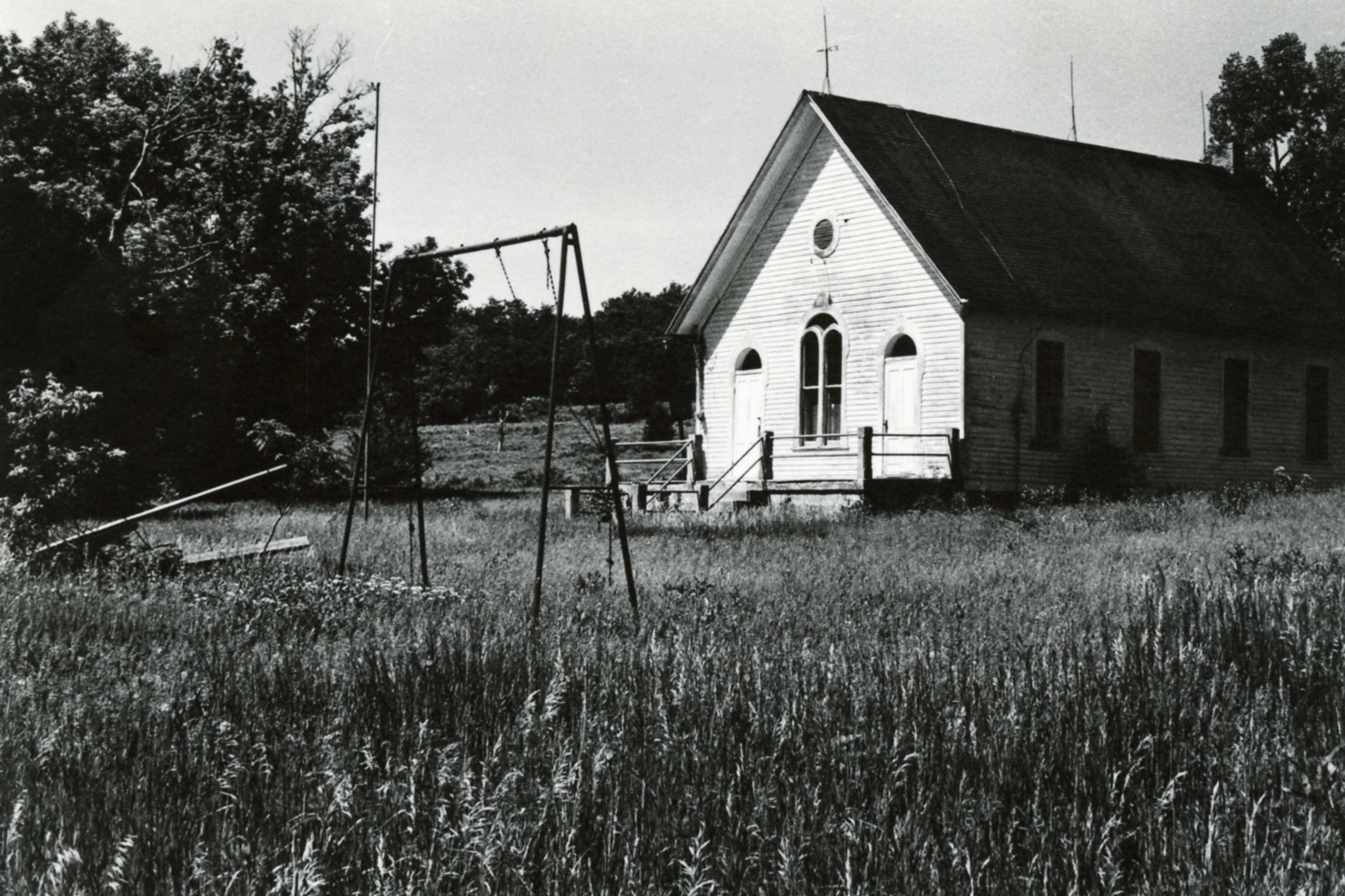
 

I guess it really was a 4 room school in that there were 2 coat rooms, the classroom and the bell pull room with cellar access. It was a treat to get to ring the bell when school started, at recess, or when school was out. Sneaking into the bell pull room was easy. However, getting back to your desk undetected after an unscheduled ringing of the bell, not so much.

The Furnace Grate:  

The cellar access was a door in the floor with a pull ring. The furnace was in the cellar. There were two grates in the classroom floor for heat, one on each side of the room. Each was about 3 feet square with a grid of 1 inch squares. The trick was to wait till the furnace was really blasting hot air then chuck a crayon into the grate. Not an easy trick with the small holes but always fun when a crayon went through and started to stink.

The Playground:  

There was a swing set that we never could swing all the way around, a triple seesaw that was probably 6 feet at the up end, and a jungle gym.3-Sunnyside-036

Then there was the flag pole that we climbed whenever the teacher was not around. The pole was really smooth, almost slick, and therefore difficult to shinny up, but the rope bracket was wicked. It was wicked because it was very pointy on the ends – not really sharp but not blunt either.

Similar to this bracket.rope bracketIt was about a foot long and the points had about a 3 inch gap from the pole. Just enough to impale your leg or butt if you slipped.
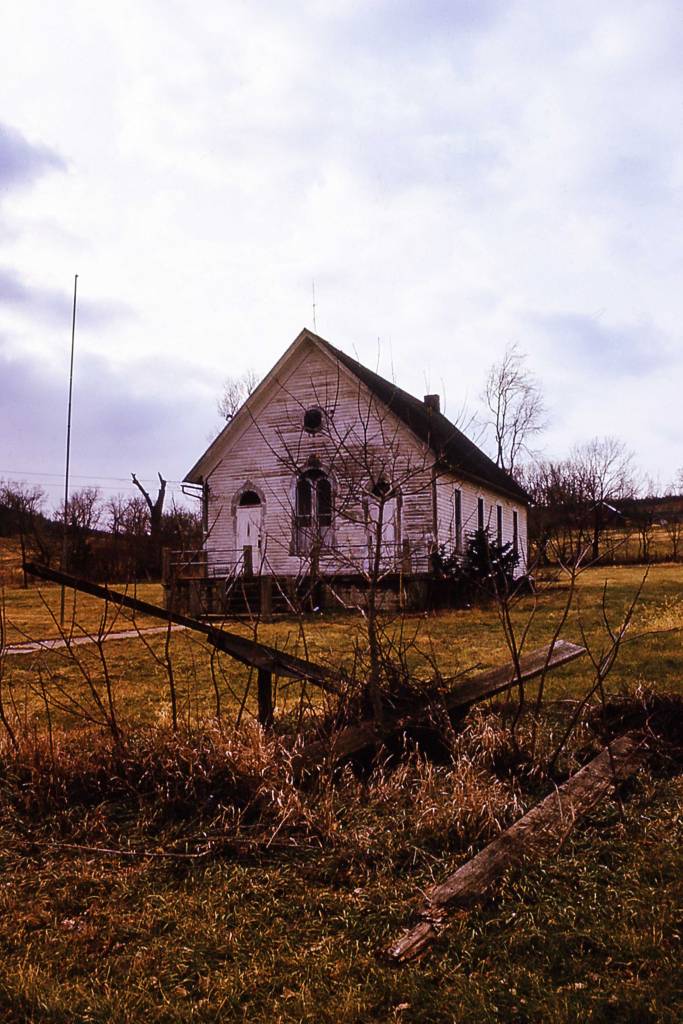
 

The Ditch:  

There was a ditch that ran all the way along the north side of the school yard. It was about 3 feet across and maybe 1 foot deep. Of course there was a 2 inch pipe laid across the ditch. Wouldn’t think much of it huh? Until, that is, one day when Steve Snow and I sneaked out, which was something we did frequently. I doubt if our sneaking out really went unnoticed but wasn’t high on the no-no list. (Remember I was in the FIRST grade!) Until that day. Steve and I had walked across the pipe a hunnert times, until that day. He slipped. Broke his arm. Compound fracture with both bones sticking out. It was way cool, although I doubt he thought so. It was much harder to sneak out after that. Of course we got into trouble but imagine the lawsuits were that to occur today!

2-Sunnyside-slide001a-(1)

Outhouses – plural:  

And the outhouses! Obviously a boys and girls (remember the two doors for the school). Such fun. They are both gone now but were behind the school. We would make sure the teacher was at her desk during recess, gather a bunch of BIG rocks (at least they were for a first grader) and throw them against the back of the schoolhouse. HUGE noise inside! Run to the outhouse to “hide.” Teacher came in anyway.

The Christmas Play:

Ahhh the Christmas play. I forget the theme of the play (must have suffered PTSD) but there was one scene in which several of us were to twirl lariats. We were decked out in cowboy boots, hats, vests, chaps (I still have the chaps) and a twirling rope. I could twirl that sucker all day.Lariat-Larry  It had a metal ring about 1 inch long at the end that you held so it would not tangle while being twirled. Worked like a charm. Until that day. Not the day Steve broke his arm, another “that day”. That stupid rope would not twirl. I was devastated. I think I made it all the way outside (again) before anyone caught me.
The Boar:

Sunnyside lasted one year. Then we moved across Mud Crick (yes that was the name, well creek but we called it crick) from the big white house dad rented to the little red cement block house he bought. The big white house was two stories – the red house was too, but the white house had a fancy landing half way down the stairs that turned 90 degrees. Seems I was sleepwalking one night and stopped on the landing and took a leak. Anyway, we raised pigs at the white house and were shipping some to market one day and for some reason there was a HUGE old MEAN boar in the mix. There was an “alley” of wooden fence leading to the holding pen. It was maybe 50 feet long. All of a sudden everyone was shouting to hit the fence and everyone clambered up the fence. Just as the boar was about to take a bite out of my arse my dad grabbed me by my overall straps and yanked me straight up. Said boar went right under me. I don’t think I peed my pants.

Mud Crick:  

bridgeThere was a bridge over Mud Crick like this but not nearly as long. It was one lane and the metal sides were probably 6 feet high. The bridge was about 15 feet above the crick. At this point the crick was shallow so there was no jumping off the bridge into a swimmin’ hole but we did walk across the railings. Probably where I got my fear of heights. Fortunately no one fell. There were a couple of places north of the bridge big enough to “swim” in. Mainly tho we caught crawdads and frogs.
The Red Block House:  

At the red house, Mike, my sister, had the upstairs room. For those of you who don’t know, her name is spelled Michele (one “l”) so pronounced like Michael. She actually got two draft notices from the Army but I digress. The upstairs room was the length of the house and there were two double beds. IMG_1773

The center 3 feet of the ceiling was the only place it was flat. From there it sloped down to about 4 feet high on each side to make storage rooms the length of the house.

There were two closets at the north end of the room separated by a window. The other end is where the stairs were. There were two windows at that end that looked out over the porch. When MA (Michele Ann) went to college I got her room and would crawl out on the porch roof to sit and contemplate the ways of the world. The stairs would creak when you walked up, then about an hour later would creak back. Creepy as hell! Now for the two closets and Halloween: I had a full sized cardboard skeleton that was painted with glow in the dark white paint. You can probably see where this is going… MA was out with friends and I put the glow in the dark skeleton inside her main closet door so when she opened the door she was nose to nose with the skeleton. You can guess the rest.

Another Skeleton Story:

I took an anatomy and physiology class at KU. I do not know the nationality of the professor but English was definitely a second language! The “jaw” was “jew,” “tongue” was “tang” and these are the only ones I can remember. Anyway, we had a lab with 3 complete cadavers. I loved that class and would come home smelling like formalin. The lab was in the basement of Strong Hall, I think. The hall to the lab was actually a long tunnel about 7 feet square, tile floor, gray ceiling and the walls were dark bead board paneling. A bare bulb hung down from the ceiling about every 20 feet, very StevenKingish. The entrance to the lab was a double door that opened out into the hall. One night after a couple of hours in the lab another student and I closed up. We took one of the two complete skeletons and placed it just inside the door. The lab was always opened by a teaching assistant who was usually a jock. BIG JOCK. We engaged him in conversation while he was unlocking the lab doors then he turned to enter the lab and was nose to nose to the skeleton. He went white and nearly passed out! I suppose now he knows who to thank.

billtownBilltown:

 The second through eighth grade was at Billtown which is slang for Williamstown. Don’t know who William was, nor why Sunnyside was closed (probably couldn’t get a new teacher after the last one went nuts). Went from a one room school to a four room school. Two grades per room. Had to ride a bus. Yellow of course.

The 5-6 grade teacher was the disciplinarian from hell. At the recess bell we had to QUIETLY put our pencils down. When everyone had put their pencils down – quietly – and at her command, TURN, we turned 90 degrees, and sat quietly. When everyone had turned, and it was supposed to be in unison but rarely was, we would, at her command, STAND – quietly – then at the command PASS we could leave the room one aisle at a time – quietly. Did not like that teacher. Don’t remember her name either. If we were not quiet we had to start over. If you wanted to survive recess you were QUIET!

The principal, and 7-8 grade teacher, was “Red” Langdon. Red was for the color of his hair. Don’t know what his first name was. He always had a chew in his lower lip. I did a report on the only summer vacation we ever took. We had a station wagon with the back seat facing backwards. In the report I said I got to see where I had been and Red got a great belly laugh out of that.

The Vacation:  

This doesn’t have anything to do with Sunnyside other than the vacation mentioned above. We went to Arizona to see some friends of the parents, Bill and Venita Green. Bill, Dad and I went to Camelback Mountain, which was waaay outside of Phoenix  (now encircled by town) to hunt for scorpions. down-scorpionBill had gotten some plastic stuff that you could ‘bake’ the specimens in to have a neat paperweight. We caught several and told Mom that one had gotten loose in the car. It took Dad a considerable amount of talking to convince her that he was teasing. Anyway, said scorpions were prepared, placed in the plastic material and then put in the oven to bake. One tipped and spilled the plastic stuff which caught fire. Not much flame but lots and lots of black smoke. Great vacation!

The Yellow Bus:  

Since Billtown was several miles away we got to ride the Yellow School Bus. The very back seats were premium! Since this was before seat belts were invented, the back seat riders were bounced about a foot off the seat when going over bumps. Standing at the kitchen sink, in the red house, you were facing west. To your left, the long side of the “L counter” was the only kitchen window. We would sit on this counter to watch for the bus coming across the bridge we didn’t jump off of. In the winter we always hoped for a snow day and would not know if there was going to be school until the bus didn’t show up.